- Home
- Product Center
- Application
- Support
- JT Cloud
- About Us
- Contact Us
 Sensor
 Measuring Instruments
 Measurement Systems
 Architectural Physics Laboratory
Leave Your Message
Choosing the right Multi-Channel Measuring Instruments starts with understanding what you need to measure, and where. A bench setup monitoring voltage, temperature, and vibration has different demands from a field system tracking several pressure sensors. List each signal type, its expected range, and how quickly it changes. A fast electrical transient, for example, may need a higher sampling rate than a slowly changing room temperature. Small details matter.
Next, compare channel count with measurement quality. Check accuracy, resolution, input isolation, sampling rate, and whether channels can be sampled simultaneously. If sensors share a reference or operate at different voltage levels, confirm that the instrument’s inputs suit the wiring plan. Review the datasheet, not just the product headline. Also consider software compatibility, data-export options, trigger functions, and the time required to configure a test. A device with many channels can still be a poor fit if its specifications miss your measurement needs.
There is no universally best choice. A higher channel count may increase cost or complicate setup, while a compact instrument may limit future expansion. Start with the signal. Then assess the environment: benchtop or portable use, available power, cable lengths, and exposure to electrical noise. Ask suppliers specific questions, and verify important specifications against documentation or a practical test. Calibration and routine checks help support trustworthy results, but they cannot fix an unsuitable measurement range. Some requirements may only become clear after a trial. That is worth admitting. The sections ahead explain how to weigh these factors and select an instrument that fits the measurement task, rather than simply choosing the longest feature list.
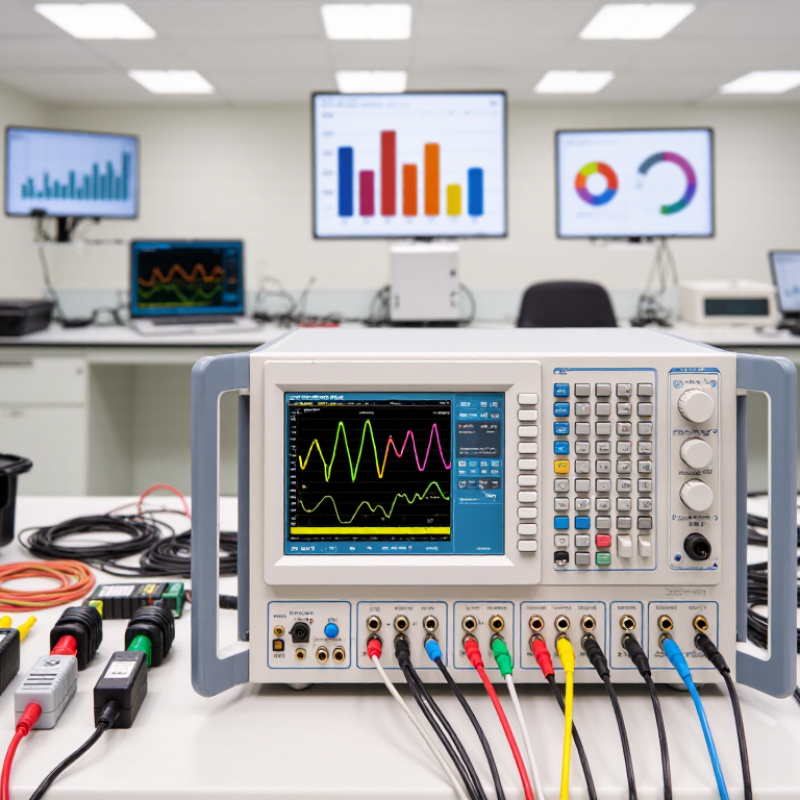
Before choosing a multi-channel measuring instrument, define what each channel must measure. List the signal type, expected range, required accuracy, and measurement speed. For example, monitoring four temperature sensors may need fewer samples per second than capturing brief voltage changes. Write down the slowest and fastest events you need to observe.
Decide whether channels must sample simultaneously or can take turns. This matters when comparing phase, timing, or short events across signals. Check input isolation and allowable voltage differences, especially when sensors use separate power sources. In bench testing, mismatched ranges can hide small changes or overload an input. I still find it easy to focus on channel count and overlook connector type or sensor compatibility. More channels are not automatically better. Choose enough capacity for planned measurements, with modest room for growth.
Tips: Make a simple channel map before buying. Note each sensor, signal range, connection, and sampling need. Then compare those requirements with the instrument specifications, not just its headline channel count. If one requirement is uncertain, verify it with a test setup; assumptions can be wrong.
| Measurement Requirement | Questions to Define | Example Requirement | Instrument Selection Guidance |
|---|---|---|---|
| Measurement objective | What physical quantities must be measured, and what decisions will the results support? | Monitor temperature, pressure, and vibration during a thermal-cycle test. | Choose an instrument that supports the required sensor types and measurement modes; different quantities may need different input modules. |
| Channel count | How many signals must be measured at the same time, including planned expansion? | 24 active channels, with capacity for 8 additional sensors. | Allow for unused or spare channels. Confirm whether the stated channel count applies to the complete system or to each module. |
| Input and sensor types | Which sensors and signal outputs will be connected? | Thermocouples, resistance temperature detectors, bridge sensors, and voltage-output transducers. | Verify input compatibility, excitation requirements, connector types, and whether signal conditioning is built in or supplied separately. |
| Measurement range | What minimum and maximum values are expected, including overloads? | Measure a pressure-transducer output from 0 to 10 V, with occasional transient peaks near 12 V. | Select a range that covers expected peaks without sacrificing needed resolution. Check input protection and overload limits. |
| Accuracy and resolution | How close must readings be to the true value, and what smallest change must be detected? | Temperature accuracy within ±0.5 °C and detection of changes of 0.1 °C. | Compare total system accuracy, not just display resolution. Include sensor tolerance, wiring effects, calibration, and environmental conditions. |
| Sampling rate | How quickly can each signal change, and how often must it be recorded? | Record slow temperature changes at 1 sample per second per channel and vibration at 10,000 samples per second. | Check the per-channel rate, not only the aggregate rate. Confirm that the instrument can meet the rate when all required channels are active. |
| Bandwidth and filtering | What signal frequencies must be preserved, and which noise should be rejected? | Capture vibration content up to 4 kHz and apply an anti-aliasing filter before digitization. | Choose suitable analog bandwidth and filtering. For sampled signals, the sampling rate must be high enough for the signal bandwidth and measurement method. |
| Channel synchronization | Do readings from different channels need to represent the same instant? | Compare pressure and vibration events with timing alignment better than 1 ms. | For phase or transient comparisons, check whether channels are sampled simultaneously or multiplexed, and review the specified channel-to-channel timing skew. |
| Electrical isolation | Are sensors connected to circuits at different ground potentials or exposed to common-mode voltage? | Measure signals on separate test points that may differ in ground potential. | Check channel-to-channel and channel-to-ground isolation ratings, common-mode limits, and installation requirements. Isolation ratings do not replace safe wiring practices. |
| Logging duration and storage | How long must measurements run, and how much data will be generated? | Log 24 channels once per second for a 72-hour test. | Estimate data volume using channel count, sampling rate, record length, and file overhead. Confirm storage capacity, transfer speed, and data backup options. |
| Operating environment | What temperatures, vibration, humidity, or electrical noise will the instrument encounter? | Operate in a test area from 10 °C to 40 °C with moderate electrical interference. | Review the rated operating environment, grounding guidance, enclosure needs, and noise immunity. Keep the instrument within its specified conditions. |
| Calibration and traceability | Is documented calibration required, and how often must it be maintained? | Use measurements for a quality record requiring traceable calibration documentation. | Confirm calibration interval, available calibration certificates, and whether the full measurement chain can be calibrated as installed. |
| Software and data output | How will readings be configured, reviewed, exported, or integrated with other systems? | Export time-stamped data to a common file format and provide an interface for automated test software. | Verify supported file formats, communication interfaces, driver availability, time stamping, and whether required software features are included. |