- Home
- Product Center
- Application
- Support
- JT Cloud
- About Us
- Contact Us
 Sensor
 Measuring Instruments
 Measurement Systems
 Architectural Physics Laboratory
Leave Your Message
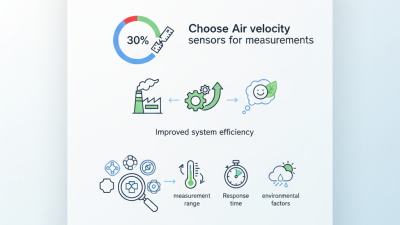
Choosing the right Air Velocity Sensor can influence measurement accuracy, energy efficiency, and equipment protection. For global buyers, the decision involves more than comparing prices or advertised ranges. A sensor used inside a clean laboratory may require different performance from one installed in a dusty warehouse, HVAC duct, or industrial exhaust system.
This guide presents ten Air Velocity Sensor options for different operating conditions and purchasing priorities. Each product should be examined through measurable factors, including velocity range, accuracy, response time, output signal, probe design, calibration support, and environmental resistance. Small errors matter. A reading that appears acceptable on a display may still affect airflow balancing or ventilation decisions.
The selection process combines technical specifications with practical experience from common measurement scenarios. Installation space, cable length, mounting method, and display visibility can become important after purchase. So can supplier communication. Reliable documentation, traceable calibration, warranty terms, and regional service support deserve careful attention. These details are often overlooked.
No single sensor is ideal for every application. That is the difficult part. Some models perform well at low air speeds but respond less effectively in turbulent ducts. Others offer robust construction but cost more than a basic monitoring project requires. Product data can also vary between manufacturers, so independent verification remains valuable.
The following comparison is designed to help engineers, facility managers, distributors, and technical buyers narrow their choices. It does not replace site testing or professional commissioning. Still, it offers a practical starting point for comparing ten widely relevant sensor types and identifying the compromises behind each purchase.
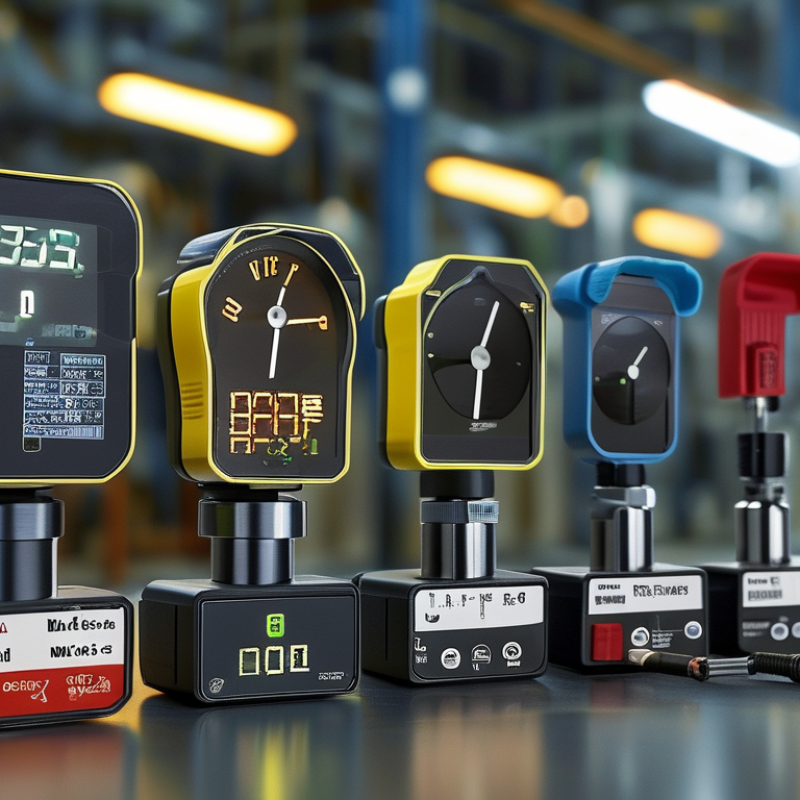
Top 10 Air Velocity Sensors for Global Buyers
Air velocity sensors measure how quickly air moves through a space or duct. They support ventilation control, equipment testing, environmental monitoring, and indoor comfort. In practice, the right sensor depends on airflow range, temperature, humidity, and installation conditions.
Several measurement principles are common. Hot-wire sensors detect cooling from a heated wire as moving air removes heat. They respond quickly and suit low-speed airflow, but dust can affect their readings. Vane sensors use a rotating wheel to estimate velocity. They are simple and practical, although they need enough airflow to start moving. Differential-pressure sensors compare pressure across a probe. Using Bernoulli’s principle, the system converts pressure difference into air velocity. Density compensation matters here.
Accuracy begins with installation. A probe placed near an elbow may read turbulence instead of average flow. Straight duct sections help. Field calibration also deserves attention. I have seen a clean sensor produce poor data after a loose cable introduced noise. Small details matter. Temperature changes can shift readings, especially in outdoor applications. Humidity may also influence air density, although its effect is often overlooked. No sensor is perfect. A thoughtful buyer should examine response time, repeatability, calibration records, output signals, and maintenance needs. The lowest price can become expensive when unstable readings drive unnecessary adjustments.
| Rank | Sensor Type | Core Measurement Principle | Typical Air-Velocity Range | Typical Accuracy | Response Time | Common Outputs | Typical Applications | Main Selection Consideration |
|---|---|---|---|---|---|---|---|---|
| 1 | MEMS Thermal Air-Velocity Sensor | Measures heat carried away from a micro-heated element by moving air. The heat-transfer change is correlated with velocity. | 0.05–30 m/s | Typically ±3–5% of reading | 10–100 ms | Analog voltage, I²C, SPI, UART | Portable instruments, smart HVAC devices, building automation, compact electronics cooling. | Excellent for small form factors and low-flow detection; sensitive to temperature, contamination, and airflow direction. |
| 2 | Constant-Temperature Hot-Wire Anemometer | Maintains a heated wire at a constant temperature. The electrical power required to offset convective cooling indicates air velocity. | 0.01–50 m/s | Typically ±1–3% of reading | Less than 1 ms to 20 ms | Analog voltage, frequency, digital interface | Laboratory airflow studies, turbulence measurement, cleanrooms, ventilation testing, research equipment. | Very high sensitivity and fast response; the exposed wire requires careful handling and clean airflow. |
| 3 | Thermal Air-Mass Flow Sensor | Uses upstream and downstream temperature sensing around a heater to determine the mass flow of air passing through a calibrated channel. | 0.1–100 m/s | Typically ±1–3% of full scale | 5–100 ms | Analog, digital, pulse, industrial bus | Air-handling units, compressed-air monitoring, gas-flow measurement, process control. | Measures mass-related flow effectively; pressure, humidity, gas composition, and installation geometry can affect calibration. |
| 4 | Vane or Propeller Anemometer | Airflow rotates a vane or propeller. Rotational speed is converted into air velocity using a calibrated relationship. | 0.3–45 m/s | Typically ±1–3% of reading | 0.5–3 s | Digital display, pulse, frequency, USB | HVAC commissioning, air outlets, exhaust systems, agricultural ventilation, field surveys. | Durable and easy to use; requires adequate duct or outlet area and has lower sensitivity at very low velocities. |
| 5 | Pitot-Static Tube with Differential Pressure Sensor | Measures the difference between total pressure and static pressure. Velocity is calculated from dynamic pressure, air density, and flow conditions. | 3–100 m/s | Typically ±1–2% of reading after installation calibration | 10–500 ms | Analog, 4–20 mA, RS-485, Modbus | Large ducts, industrial ventilation, furnace systems, aerospace testing, high-speed airflow measurement. | Suitable for high temperatures and dirty air when properly designed; requires correct alignment, pressure tubing, and density compensation. |
| 6 | Ultrasonic Transit-Time Anemometer | Determines velocity from the difference in ultrasonic travel time between upstream and downstream acoustic paths. | 0–60 m/s | Typically ±1–2% of reading | 20–500 ms | Digital, RS-485, Ethernet, relay | Weather monitoring, tunnels, industrial stacks, ventilation systems, outdoor airflow measurement. | Has no moving parts and can measure direction; acoustic interference, condensation, and mounting geometry require attention. |
| 7 | Hot-Film Air-Velocity Sensor | Uses a heated thin-film element whose temperature or resistance changes as airflow removes heat from its surface. | 0.05–40 m/s | Typically ±2–5% of reading | 1–50 ms | Analog voltage, resistance, digital interface | Automotive climate systems, ventilation controls, laboratory instruments, air-quality equipment. | More mechanically robust than a fine wire; performance depends on temperature compensation and protection from dust or droplets. |
| 8 | Differential-Pressure Air-Velocity Probe | Uses a pressure-sensing element with a flow probe, nozzle, or calibrated restriction. Velocity is derived from the measured pressure difference. | 1–50 m/s | Typically ±1–3% of full scale | 50–1,000 ms | 0–10 V, 4–20 mA, digital bus | Building management systems, filter monitoring, fan control, duct balancing, industrial process equipment. | Works well for permanent installations; low-speed accuracy depends strongly on pressure range, tubing, leakage control, and calibration. |
| 9 | Omnidirectional Thermal Anemometer | Uses a sensing arrangement designed to respond to airflow from multiple horizontal directions without requiring precise probe alignment. | 0.05–20 m/s | Typically ±3–5% of reading | 20–200 ms | Analog, digital, wireless, building-control protocol | Indoor air-quality systems, room comfort monitoring, displacement ventilation, occupancy-related airflow studies. | Useful where airflow direction changes frequently; generally less suitable for high-speed or highly contaminated environments. |
| 10 | Averaging Pitot or Multi-Point Flow Sensor | Samples pressure at several points across a duct profile and averages the readings to estimate representative airflow velocity. | 3–40 m/s | Typically ±2–5% of reading | 100–1,000 ms | Differential pressure, 4–20 mA, 0–10 V, digital bus | Large commercial ducts, air-handling units, fan monitoring, energy management, industrial exhaust systems. | Provides stable duct-wide measurement and lower sensitivity to profile variation; needs adequate straight-run length and correct probe placement. |
Technical note: Air velocity is the speed and direction of moving air, commonly expressed in metres per second (m/s). Stated ranges and accuracies are typical engineering values for ambient air near standard atmospheric conditions; actual performance depends on temperature, pressure, humidity, air density, contamination, installation geometry, calibration, and flow profile.