What is Wet Bulb Globe Thermometer Wbgt and How to Use It for Heat Stress Management
The increasing frequency of heatwaves and the accompanying rise in heat-related illnesses underscore the necessity for effective heat stress management within various industries, from construction to agriculture. The Wet Bulb Globe Thermometer (Wbgt) serves as a crucial tool in measuring heat stress, integrating temperature, humidity, wind speed, and solar radiation into a single index. According to a report by the National Institute for Occupational Safety and Health (NIOSH), exposure to high heat can lead to serious health issues, including heat exhaustion and heat stroke, with incidences rising annually in tandem with global warming trends.
Dr. John Smith, a leading expert in occupational health and safety, emphasizes the importance of using the Wet Bulb Globe Thermometer (Wbgt) in workplace environments susceptible to heat stress: "Implementing the Wbgt as a monitoring tool is not merely a best practice; it's an essential step in safeguarding workers' health during extreme temperatures." His insights align with research indicating that effective heat stress management practices can reduce heat-related illnesses by up to 50%. As organizations strive to adhere to evolving health and safety standards, the accurate measurement and analysis provided by the Wet Bulb Globe Thermometer (Wbgt) is pivotal in designing preventive measures, ultimately ensuring a safer working environment for all.

What is a Wet Bulb Globe Thermometer (WBGT)?
The Wet Bulb Globe Thermometer (WBGT) is an essential tool used for assessing heat stress in occupational environments. It combines measurements of dry air temperature, humidity, and radiant heat to provide a more comprehensive understanding of thermal exposure. The WBGT reading is crucial in settings where heat is a significant factor, such as construction sites, factories, and military training environments. According to the U.S. Occupational Safety and Health Administration (OSHA), heat-related illnesses can lead to severe health consequences and even fatalities, emphasizing the importance of effective monitoring.
The WBGT index is calculated using a formula that accounts for three different temperature readings: the natural wet bulb temperature, the black globe temperature, and the dry bulb temperature. This index is particularly useful because it represents how hot it actually feels, taking into consideration both humidity and environmental factors. A report by the National Institute for Occupational Safety and Health (NIOSH) notes that heat stress can lead to decreased productivity and increased accidents at work, with the WBGT serving as a reliable measure for employers to implement potential heat stress prevention strategies.
Regular use of the WBGT can guide the establishment of necessary precautions, such as rest breaks and hydration protocols, ensuring worker safety and well-being during high-temperature conditions.
Understanding the Components of WBGT Measurement
The Wet Bulb Globe Thermometer (WBGT) is an essential tool for measuring heat stress in various environments, specifically those that require a detailed understanding of temperature, humidity, and radiant heat. The WBGT combines three key components: the dry bulb temperature, the wet bulb temperature, and black globe temperature. The dry bulb temperature is the regular air temperature, while the wet bulb temperature provides a measure of humidity through evaporative cooling effect. The black globe temperature captures the heat from solar radiation, making it critical for assessing outdoor conditions, especially in direct sunlight.
According to the American Conference of Governmental and Industrial Hygienists (ACGIH), the WBGT index is utilized extensively in industrial settings to determine appropriate work-rest cycles for employees exposed to heat. The ACGIH advises that a WBGT reading above 25°C (77°F) may trigger the onset of heat stress symptoms, necessitating preventive measures. This measurement not only assists safety professionals in formulating heat exposure limits but also serves as an important metric for industries such as construction, agriculture, and sports, where heat-related illnesses can significantly impact performance and health. By incorporating WBGT data into heat stress management strategies, organizations can maintain worker safety and enhance productivity in extreme heat conditions.
How to Accurately Use a WBGT for Heat Stress Monitoring
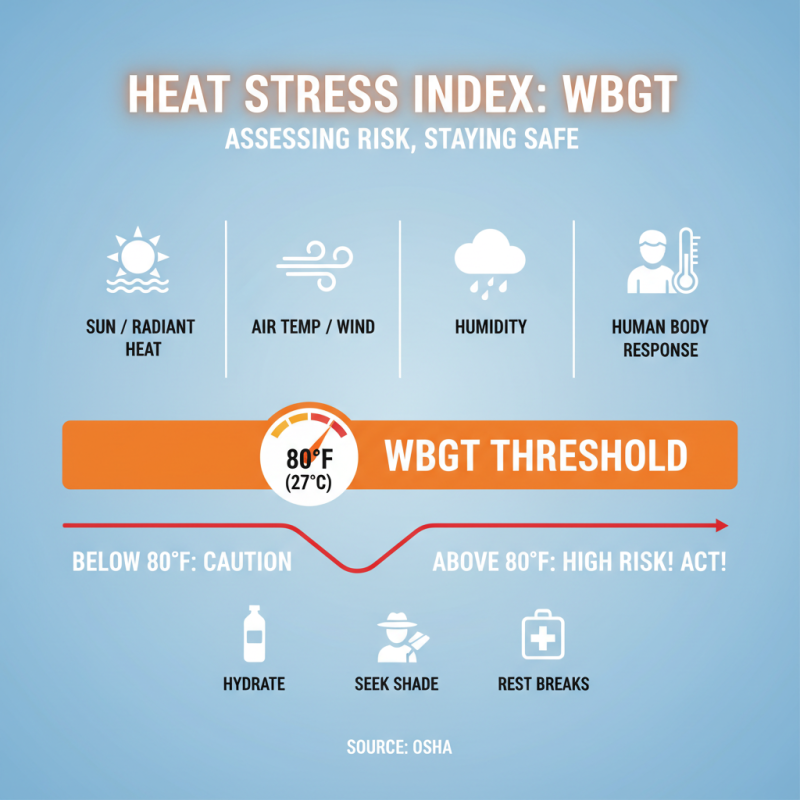
The Wet Bulb Globe Temperature (WBGT) is a critical index utilized for assessing heat stress in various environments, particularly in industries like construction, agriculture, and sports. To accurately monitor heat stress, the WBGT takes into account multiple factors: the ambient air temperature, humidity, wind speed, and radiant heat from the sun or other sources. According to the Occupational Safety and Health Administration (OSHA), a WBGT value of 80°F (approximately 27°C) serves as a baseline for implementing heat safety protocols, with values exceeding this indicating heightened risks for heat-related illnesses.
Using a WBGT effectively involves regular measurements throughout the day, especially during the hottest hours. It's essential to use the thermometer in locations that reflect typical working conditions, away from direct sunlight or any artificial heat sources. The National Institute for Occupational Safety and Health (NIOSH) recommends that outdoor workers receive specific training on how to recognize heat stress symptoms and respond according to the WBGT readings. Consistent monitoring not only aids in ensuring worker safety but also enhances productivity, as excessive heat can lead to decreased performance and increased error rates. By integrating WBGT readings into daily operational strategies, employers can create a safer working environment that mitigates heat-related risks.
Interpreting WBGT Readings for Effective Heat Stress Management
The Wet Bulb Globe Temperature (WBGT) is an essential metric for managing heat stress, particularly in environments where individuals are exposed to high temperatures and humidity. This index combines air temperature, humidity, and radiant heat into a single number, allowing for a comprehensive assessment of heat stress risk. To effectively interpret WBGT readings, understanding the different thresholds is crucial. Generally, a WBGT reading below 25°C indicates a low risk of heat stress, while readings above 32°C suggest high risk, necessitating immediate precautions to ensure safety.
When interpreting WBGT values, it is vital to consider not only the numerical reading but also the context of the activity being performed. For example, light physical activities in shaded areas will have different implications compared to strenuous work in direct sunlight. Specific protocols may vary by organization, but common recommendations at higher WBGT levels include increased rest breaks, hydration guidelines, and adjustments in workload. By leveraging WBGT for real-time assessments, organizations can better safeguard their workers and athletes from heat-related illnesses, ensuring a proactive approach to heat stress management.
What is Wet Bulb Globe Thermometer WBGT and How to Use It for Heat Stress Management
| Parameter |
Description |
Typical Value |
Action Level |
| Dry Bulb Temperature (DBT) |
The temperature of air measured by a regular thermometer |
29°C |
Above 30°C: Increased heat stress risk |
| Wet Bulb Temperature (WBT) |
The lowest temperature that can be reached by evaporating water into the air |
24°C |
Above 26°C: High humidity impacts |
| Globe Temperature (GT) |
The temperature measured by a globe thermometer that accounts for radiant heat |
31°C |
Above 32°C: Significant heat stress risk |
| WBGT Index |
A composite index used to assess heat stress |
29°C |
Above 28°C: Caution, risk of heat-related illness |
Best Practices for Implementing WBGT in Work and Sports Environments
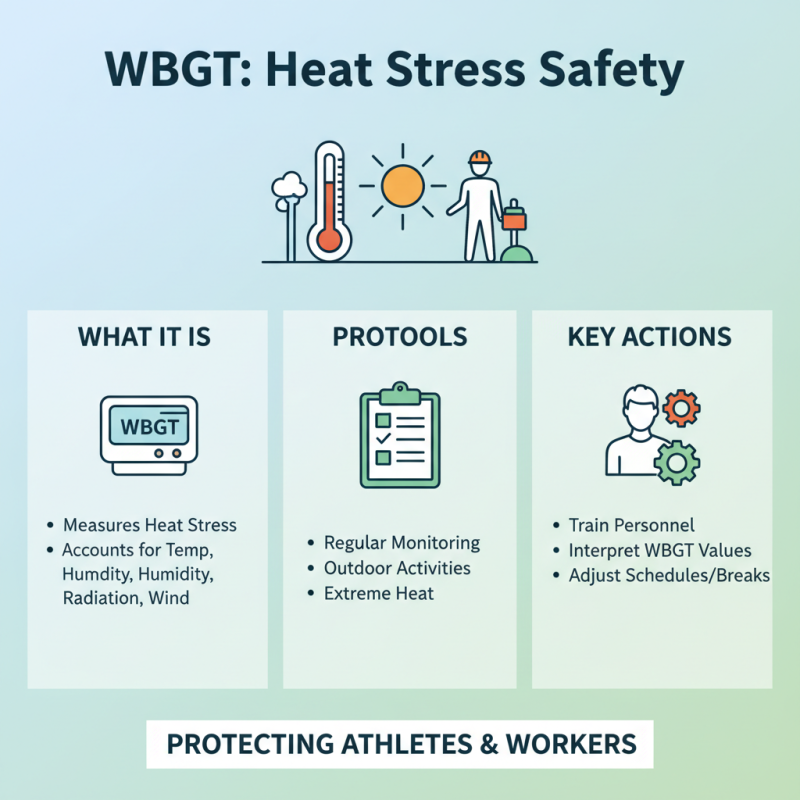
To effectively implement the Wet Bulb Globe Thermometer (WBGT) in work and sports environments, it is crucial to establish clear protocols for regular monitoring. Regular WBGT measurements should be taken during outdoor activities, particularly in extreme heat conditions, to ensure that all participants, including athletes and workers, are safeguarded against heat stress. Training personnel to understand how to read and interpret WBGT values is essential. These values indicate the level of heat stress and help in making informed decisions regarding work schedules and rest breaks.
Moreover, integrating WBGT readings into a broader heat stress management plan can enhance safety measures. For example, organizations should develop specific guidelines for when to halt activities based on WBGT thresholds. Providing hydration stations and shaded areas during high heat exposure can also mitigate the risk of heat-related illnesses. Encouraging regular breaks for cooling down, combined with educational sessions on recognizing heat stress symptoms, empowers individuals to take proactive steps in protecting their health. By following these practices, workplaces and sports facilities can create a safer, more responsive environment conducive to high performance even in challenging conditions.

 Sensor
 Measuring Instruments
 Measurement Systems
 Architectural Physics Laboratory