Top Wind Speed Sensors for Global Buyers in 2026?
As the demand for renewable energy sources escalates globally, the importance of accurate wind speed measurement becomes increasingly vital. The "Wind Speed Sensor" industry is projected to grow significantly, reaching a market value of approximately $1.2 billion by 2026, according to a recent report by Market Research Future. These sensors are critical for optimizing wind turbine operations and enhancing energy efficiency. Industry expert Dr. Richard Thorne emphasizes, “Precision in wind speed measurement is the foundation for effective wind energy management.”
Experts also highlight the variability in sensor accuracy, which can impact energy predictions. A study conducted by the Journal of Renewable Energy Technology revealed that up to 30% of energy generation forecasts are influenced by imprecise wind speed data. This indicates a pressing need for reliable sensors as the energy market evolves. Buyers in 2026 must navigate a landscape filled with various sensor technologies and quality levels.
While advancements are being made, challenges remain, particularly in harsh weather conditions. Not all sensors perform equally under extreme scenarios. Thorough testing and understanding of each product's specifications will be essential for successful adoption. Thus, focusing on quality and accuracy is not just advisable; it's necessary for the future of the wind energy sector.

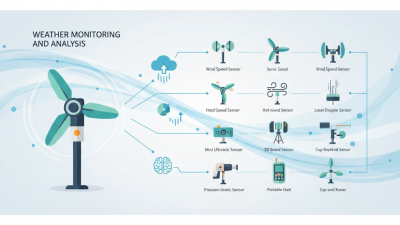
Top Wind Speed Sensors Overview: Key Technologies and Trends
In 2026, the wind speed sensor market will likely face significant changes. Advanced technologies are emerging to meet the growing demand for renewable energy. According to a recent industry report, the global market for wind speed sensors is projected to reach $2.5 billion by the end of the decade.
One noticeable trend is the integration of IoT technology. Sensors equipped with wireless capabilities can transmit data in real-time. This facilitates better monitoring and predictive maintenance. Moreover, advancements in sensor accuracy and size are expected. The decrease in manufacturing costs will make these technologies more accessible to various sectors.
Some challenges remain, however. Some sensors still struggle with performance in extreme weather conditions. Additionally, data security concerns around IoT devices persist. Buyers should evaluate these factors when choosing a wind speed sensor. The balance between cost and reliability will be crucial for decision-makers. Being aware of these aspects is essential for making informed purchases.
Key Features to Consider When Selecting Wind Speed Sensors
When selecting wind speed sensors, consider accuracy and response time. Accuracy is crucial for reliable data, especially in meteorological applications. Most high-quality sensors provide an accuracy of ±1% of the measured value. In contrast, budget models may fall short, leading to data inconsistencies.
Tips: Look for sensors with a fast response time. Sensors that respond in under 1 second are ideal for dynamic environments.
Durability is another vital factor. Wind speed sensors are often exposed to harsh conditions. Ensure the chosen sensor can withstand extreme temperatures and humidity. For instance, models with an IP rating of 65 or higher tend to perform better in adverse weather.
Tips: Assess the maintenance requirements. Frequency of required calibrations can influence long-term operational costs. It's essential to balance quality with ongoing expenses.
Top Wind Speed Sensors for Global Buyers in 2026
| Sensor Type |
Measurement Range (m/s) |
Accuracy (%) |
Response Time (s) |
Output Type |
Operating Temperature (°C) |
| Anemometer |
0.3 - 60 |
±2 |
1 |
Analog |
-40 to 60 |
| Laser Wind Sensor |
0.1 - 30 |
±1 |
0.2 |
Digital |
-20 to 50 |
| Cup Anemometer |
0.5 - 35 |
±3 |
0.5 |
Analog |
-30 to 70 |
| ultrasonic Anemometer |
0.1 - 40 |
±1.5 |
0.2 |
Digital |
-40 to 60 |
Leading Manufacturers in the Wind Speed Sensor Market for 2026
The wind speed sensor market is evolving rapidly. In 2026, key manufacturers will focus on innovation and accuracy. Their products will need to provide real-time data for meteorological applications and wind energy generation. Advanced sensors will likely incorporate new technologies, enhancing sensitivity and response time.
Manufacturers should emphasize reliability and durability. As wind conditions can vary widely, sensors must perform consistently in diverse environments. Some devices may face challenges, such as calibration issues or environmental damage. It's vital for companies to address these concerns. This could involve investing in better materials or improved designs.
Market dynamics will demand these sensors to be cost-effective too. Buyers will seek reliable products without compromising quality. Thus, manufacturers must strike a balance between affordability and performance. Addressing these critical areas can help meet the rising global demands for wind speed monitoring solutions.
Market Demand and Applications for Wind Speed Sensors Worldwide
The demand for wind speed sensors is rapidly increasing worldwide. These sensors are essential in various sectors, including renewable energy and meteorology. As the world shifts towards greener alternatives, accurate wind measurement becomes crucial for efficient energy generation. Wind farms particularly rely on these sensors for site assessment and operational optimization.
Investing in wind speed sensors offers opportunities beyond energy production. Weather forecasting, aviation, and marine navigation all benefit from precise wind data. Accurate sensors help in understanding weather patterns and improving safety measures in aviation. Many manufacturers are innovating to meet the different requirements of various industries, resulting in enhanced sensor designs.
Tips: Choose sensors that provide real-time data. This ensures timely decision-making in critical situations. Also, consider the sensor's durability, especially in harsh environments. Regular maintenance is essential to ensure long-term reliability. A good sensor should adapt to diverse applications, enhancing its value. Balancing performance with budget constraints is vital for effective investment.
Future Innovations and Predictions for Wind Speed Sensor Technology
As the world pivots toward sustainable energy, wind speed sensor technology is poised for transformative innovations. In 2026, advancements will likely focus on greater precision and reliability. Emerging materials, such as lightweight composites, can enhance sensor durability and performance. These materials will withstand harsh weather, ensuring accurate data collection in diverse environments.
Integration with IoT technology will facilitate real-time data transmission. This means users can access wind speed information from anywhere. However, potential challenges in data security must be addressed. While innovations present exciting prospects, there’s a need for robust protocols. With more stakeholders relying on this data, any breach could have serious implications.
The future also calls for user-friendly interfaces. As technology advances, sensors should become more accessible to non-experts. Intuitive apps could display data trends simply. Yet, the balance between complexity and usability remains delicate. Designers need to consider how to convey complex information while keeping it engaging. This ongoing dialogue around functionality will guide the evolution of wind speed sensors in the coming years.

 Sensor
 Measuring Instruments
 Measurement Systems
 Architectural Physics Laboratory