Top 10 Best Air Velocity Sensors for Accurate Measurements?
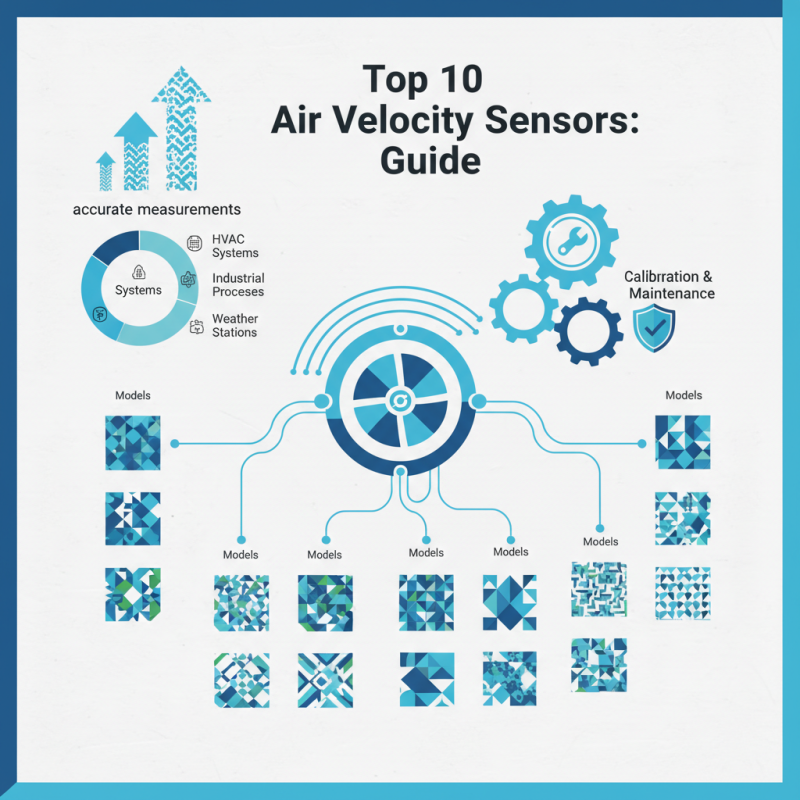
In today's world, accurate measurements are crucial, especially when it comes to air velocity. An Air Velocity Sensor plays a vital role in various applications. These sensors help monitor airflow in HVAC systems, industrial processes, and weather stations.
Selecting the right sensor can be challenging. With so many options available, some users may struggle to find the best fit for their needs. It's not always clear which features matter most. Calibration can be difficult, and even minor errors can affect results. This is where understanding different models comes into play.
Investing in an Air Velocity Sensor is essential for precise data collection. Quality sensors enhance efficiency and safety. However, users must remain vigilant about maintenance. Some may overlook this step, leading to inaccurate readings. A reliable sensor can uplift performance, but only if it is properly utilized and cared for.
Overview of Air Velocity Sensors and Their Importance
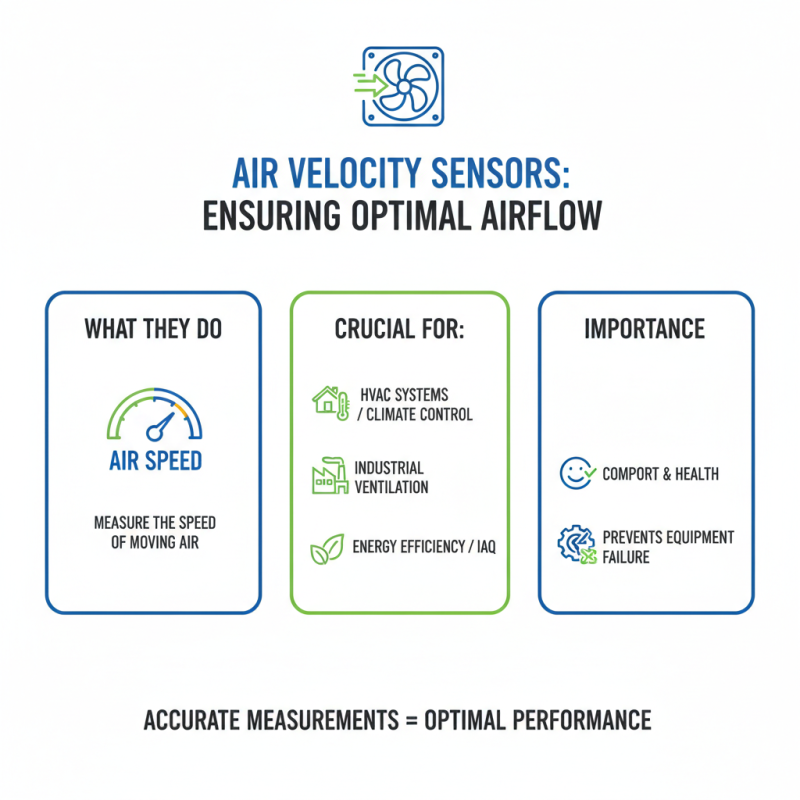
Air velocity sensors play a crucial role in various industries. They measure the speed of moving air, which is vital for different processes. Accurate measurements ensure optimal performance in HVAC systems, climate control, and industrial ventilation. These sensors help maintain indoor air quality and energy efficiency. When air velocity is incorrect, it can lead to discomfort or equipment failure.
In many situations, users overlook the importance of calibration. Sensor drift over time can result in inaccurate readings. Regular checks and recalibrations are necessary to ensure reliable performance. Some sensors are affected by environmental factors like temperature and humidity. Ignoring these variables may produce skewed results. Users should be aware of this potential pitfall.
The technology has advanced significantly, but challenges remain. Not all sensors are suitable for every application. Selecting the right type requires careful consideration of specific needs. Some sensors may lack sensitivity in low airflow conditions. This can be problematic in applications requiring high accuracy. Continuous learning and adaptation are essential in choosing the best air velocity sensors.
Key Features to Look For in Air Velocity Sensors
When selecting air velocity sensors, there are key features to consider. Accuracy is essential. A good sensor should provide reliable measurements. Look for models with a high resolution. This ensures that small changes can be detected. Durability is another critical factor. Sensors can experience harsh conditions. They should withstand dust and moisture well.
Sensitivity is an important feature too. A sensor that can detect low air velocities may be useful in specific applications. Features like adjustable ranges can help tailor measurements. It’s worth pondering if a simple design is better for your needs. Complex sensors may confuse users.
Tips: Always check sensor calibration options. A poorly calibrated device can lead to inaccurate results. Make sure you understand how to maintain the sensor. Regular checks can prevent errors. Lastly, consider the installation process. If it’s complicated, you might face challenges later on. Reflecting on these points can guide you to the right choice.
Top 10 Best Air Velocity Sensors for Accurate Measurements
| Sensor Model |
Measurement Range (m/s) |
Accuracy (%) |
Response Time (ms) |
Output Type |
| Model A |
0.5 - 20 |
±2% |
100 |
Analog Voltage |
| Model B |
0.2 - 15 |
±3% |
200 |
Digital Output |
| Model C |
0.1 - 25 |
±1.5% |
150 |
Analog Current |
| Model D |
0 - 10 |
±5% |
300 |
RS-232 |
| Model E |
0.5 - 30 |
±2.5% |
120 |
USB Output |
| Model F |
1 - 40 |
±4% |
250 |
Analog Voltage |
| Model G |
0 - 50 |
±2% |
90 |
Digital Output |
| Model H |
0.3 - 20 |
±3% |
350 |
RS-485 |
| Model I |
0.1 - 35 |
±2.2% |
110 |
Analog Current |
| Model J |
0 - 60 |
±3.5% |
180 |
USB Output |
Top 10 Air Velocity Sensors: A Detailed Review
When selecting air velocity sensors, accuracy is key. These devices measure how fast air moves in a given space. They find applications in HVAC, environmental monitoring, and industrial processes. A good sensor captures rapid changes in airflow. It should also provide reliable readings under various conditions. Some models excel in low airflow. Others perform well in high-speed environments.
Not all sensors offer the same level of precision. Factors such as sensor type, calibration, and environmental interference play a role. Users might ignore calibration, leading to poor results. Regular checks ensure consistent measurements. Some sensors can be tricky to install. Efforts spent on proper installation are often worth it.
In a fast-paced world, instant readings enhance decision-making. However, be wary of sensors that promise too much. They might lack the reliability of simpler designs. Striking a balance between features and accuracy is vital. Investing in a quality sensor pays off in the long run. Think about your specific needs before making a choice. A detailed review can guide your selection process effectively.
Top 10 Best Air Velocity Sensors for Accurate Measurements
Comparative Analysis of Accuracy and Reliability
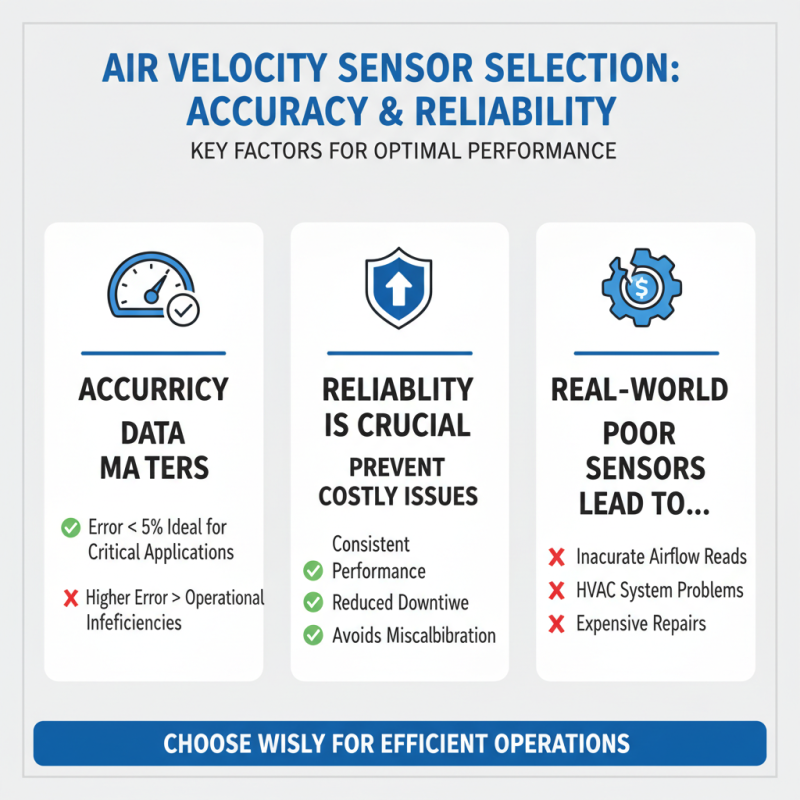
When selecting air velocity sensors, accuracy and reliability are paramount. Industry reports indicate that sensor accuracy greatly impacts data quality. For instance, a study showed that less than 5% error margin is ideal for critical applications. In contrast, sensors with a higher error can lead to significant operational inefficiencies. A poorly calibrated sensor might misread airflow, affecting HVAC systems and prompting costly repairs.
Different sensor types present varying reliability levels. For example, anemometers often provide reliable readings but can be sensitive to external factors like temperature and humidity. Moreover, a recent analysis highlighted that some setups require recalibration every few months. This raises questions about long-term reliability and maintenance efforts. Investing in sensors that promise stability under diverse conditions becomes essential.
In real-world applications, the disparity in performance can be surprising. Some sensors may seem accurate in controlled environments but falter in dynamic settings. A manufacturer’s specifications may not always reflect practical use. This inconsistency underlines the need for thorough testing before deployment. Continuous evaluation of sensor performance is crucial, even post-installation, to ensure data integrity.
Applications of Air Velocity Sensors in Various Industries
Air velocity sensors play a crucial role in various industries. In the HVAC sector, they monitor airflow in ducts. This ensures proper ventilation. Improper airflow can lead to energy loss and discomfort. Accurate measurements help maintain a consistent climate.
In the agricultural domain, these sensors are vital. They help in optimizing greenhouse conditions. Consistent air velocity ensures the healthy growth of plants. If the air is stagnant, pests and diseases may thrive. Thus, monitoring air velocity can enhance yields and reduce risks.
In industrial settings, air velocity sensors ensure worker safety. They detect air quality issues and help prevent hazardous situations. For instance, in mining, monitoring airflow is critical. Poor ventilation can expose workers to harmful gases. Making use of these sensors can save lives.

 Sensor
 Measuring Instruments
 Measurement Systems
 Architectural Physics Laboratory