How to Choose the Right Radiation Monitor for Your Needs?
Choosing the right Radiation Monitor can feel daunting. With various options available, how do you know which one suits your needs? Dr. Emily Hayes, a leading expert in radiation safety, states, "Selecting a radiation monitor requires understanding your environment and specific needs."
Radiation monitors vary widely. Some are designed for industrial use, while others cater to personal safety. Each device has different features, costs, and sensitivities. Understanding these can help narrow down your choices.
It's essential to consider factors like detection range, calibration, and portability. A more expensive monitor may not always be the best fit. Sometimes, simpler devices meet your needs more effectively. Evaluate your requirements carefully to avoid over-commitment to complex features that may go unused.
Understanding the Different Types of Radiation Monitors Available Today
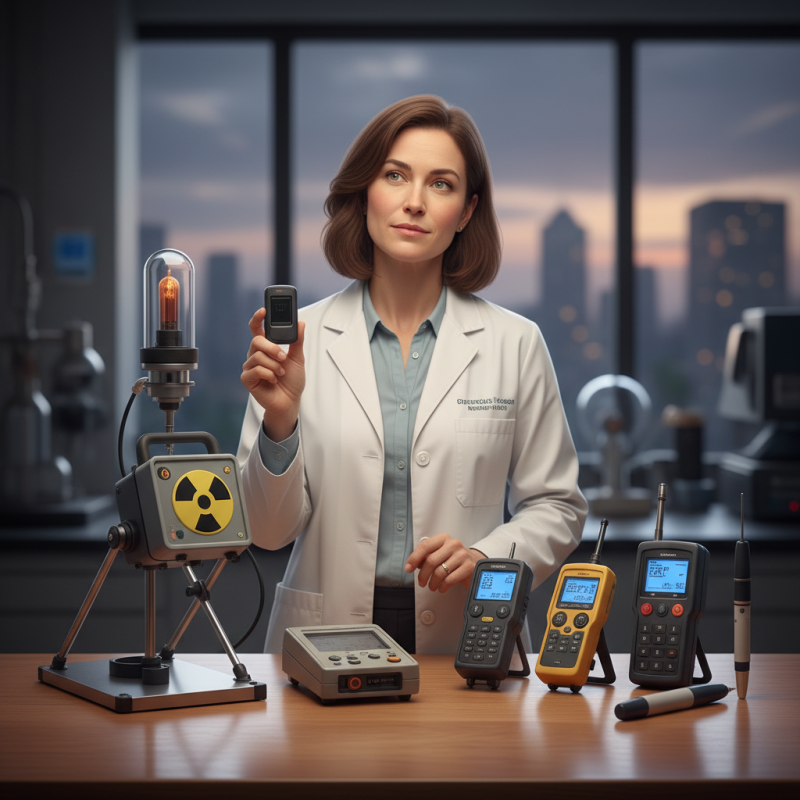
When selecting a radiation monitor, understanding the different types available is essential. There are primarily three categories:
survey meters,
personal dosimeters, and
area monitors.
Survey meters measure high levels of radiation in specific locations. They are useful for emergency responders and safety officers. Personal dosimeters track individual exposure over time, which is valuable for workers in radiation-prone environments.
Area monitors continuously assess radiation levels across broader regions. These are often installed in facilities like nuclear power plants. Each type serves a unique purpose and has its strengths and weaknesses.
For instance, while survey meters provide immediate readings, they may not reflect long-term exposure risks. Conversely, dosimeters may not offer real-time data, leading to potential gaps in safety protocols.
Consider your needs carefully. Are you monitoring a specific area, or do you need personal tracking? The choice may feel overwhelming. Reflect on your situation. Speak to experts if needed. Ultimately, the right choice enhances safety and ensures effective radiation management.
Key Factors to Consider When Choosing a Radiation Monitor for Personal Use
Choosing the right radiation monitor for personal use can be overwhelming. Key factors to consider include sensitivity, measurement range, and ease of use. According to recent industry reports, devices with a sensitivity range of 0.1 to 1,000 µSv/h are ideal for most users. This range allows for accurate readings in various environments.
When selecting a device, also consider the types of radiation it detects. Alpha, beta, and gamma radiation have different implications for safety and monitoring needs. Look for monitors that cover multiple radiation types. Many users prioritize convenience too. Lightweight devices with user-friendly interfaces are easier to carry and operate.
Tips: Check calibration frequency. Many professionals recommend calibration every six months for accuracy. Always read reviews from credible sources. User experiences can highlight potential flaws. Don't rush your decision. Take your time to weigh your options. A rushed choice can lead to regrets later, especially when safety is at stake.
Evaluating Sensitivity and Detection Limits in Radiation Monitoring Devices
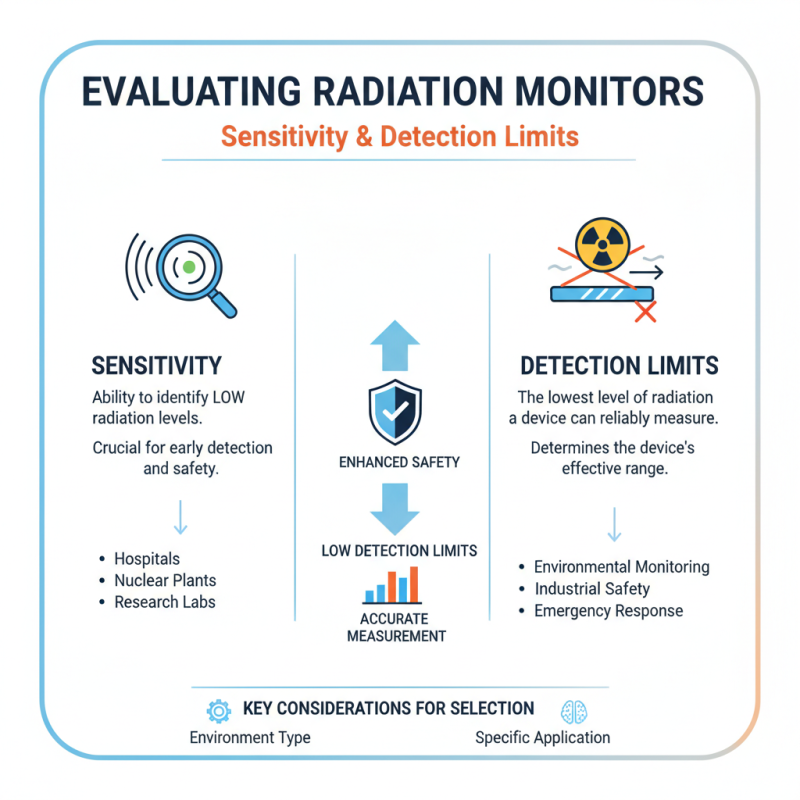
When selecting a radiation monitor, sensitivity and detection limits are paramount. Sensitivity refers to how well a device can identify low radiation levels. A highly sensitive monitor can detect even minor fluctuations. This is crucial for ensuring safety in various environments, such as hospitals or nuclear plants.
Detection limits indicate the smallest amount of radiation the device can recognize. A lower detection limit allows for earlier warnings of potential hazards. Users must consider their specific needs. For instance, medical facilities may benefit from devices with high sensitivity. In contrast, industrial users might prioritize durability over sensitivity.
Tips: Always check the calibration frequency of the device. A well-calibrated monitor provides reliable data. Regular maintenance is essential to ensure consistent performance. Also, consider user training on interpreting results. Misunderstanding readings can lead to overreactions or complacency. Each setting has unique radiation levels, which can complicate monitoring efforts. Assessing both sensitivity and detection limits will help you make an informed decision aligned with your requirements.
The Role of Calibration and Certification in Radiation Monitor Selection
Calibration and certification play a crucial role in selecting radiation monitors. Proper calibration ensures that the device accurately measures radiation levels. According to the American National Standards Institute (ANSI), regular calibration can enhance the reliability of readings by up to 25%. Without it, you risk obtaining misleading data, especially in high-stakes environments.
Certification from recognized organizations guarantees that a monitor meets specific performance standards. The International Electrotechnical Commission (IEC) highlights that certified monitors undergo rigorous testing for reliability and accuracy. This ensures they are equipped to handle various radiation types. Neglecting this step can lead to serious consequences in occupational safety, where even minor inaccuracies can cause significant risks.
Many users overlook the importance of regular calibration and certification. Some believe that once certified, a monitor remains accurate indefinitely. However, environmental factors and wear can affect performance over time. Data from the Nuclear Regulatory Commission indicate that up to 15% of uncalibrated monitors fail to detect radiation accurately within a year. Understanding these factors is essential for effective radiation safety monitoring.
Cost vs. Accuracy: Finding the Best Value in Radiation Monitoring Solutions
Selecting a radiation monitor involves balancing cost and accuracy. Many users assume higher-priced models guarantee better performance. However, this is not always the case. It's essential to assess your specific needs before diving in. Do you need a monitor for personal safety, industrial use, or research? Each scenario demands different features.
Accuracy is critical in radiation monitoring. Inexpensive devices may lack precision, resulting in misleading readings. If you're working in high-risk environments, trust should guide your choice. Reliable monitors can provide peace of mind when it matters. However, there are budget options that still perform well for occasional use. Always check user reviews and third-party testing.
Remember, it's okay to feel overwhelmed. With so many options, finding the right fit can be challenging. Investing more upfront might save you money later. Avoid jumping on the cheapest deal; it could cost you in the long run. Research, compare features, and assess your needs carefully. In the end, the right balance between cost and accuracy will serve you best.
How to Choose the Right Radiation Monitor for Your Needs?
| Monitor Type |
Cost ($) |
Measurement Range (μSv/h) |
Detection Accuracy (%) |
Data Logging Capability |
Portability |
| Geiger-Muller Counter |
150 |
0.01 - 1000 |
±10 |
Yes |
Portable |
| Spectrometer |
1000 |
0.1 - 1000 |
±5 |
Yes |
Less Portable |
| Personal Dosimeter |
200 |
0.1 - 100 |
±15 |
No |
Portable |
| Ionization Chamber |
500 |
0.01 - 5000 |
±8 |
Yes |
Less Portable |

 Sensor
 Measuring Instruments
 Measurement Systems
 Architectural Physics Laboratory