Choosing the China best Thermal Comfort Measuring System Manufacturer requires more than comparing prices or sensor lists. Reliable manufacturers understand how people experience heat, humidity, air movement, and radiant temperature inside real buildings. Their systems should translate these conditions into dependable measurements for offices, hospitals, factories, laboratories, and passenger spaces.
Professor Povl Ole Fanger, a leading authority in indoor environmental quality, defined thermal comfort as “that condition of mind which expresses satisfaction with the thermal environment.” This principle still matters. A serious Thermal Comfort Measuring System should measure air temperature, relative humidity, air velocity, and mean radiant temperature with stable, traceable instruments. Some advanced systems also calculate PMV and PPD indicators, helping engineers compare measured conditions with established comfort models.
Details reveal quality.
A practical supplier should explain sensor accuracy, calibration procedures, response time, software compatibility, and field support. For example, a well-designed instrument can identify a cold draft near a window or excessive radiant heat beside a sunlit wall. That evidence is more useful than a simple room-temperature reading.
Still, no manufacturer can promise perfect comfort for every occupant. Clothing, activity, age, and personal preference influence results. This is where buyers must think critically. A system may produce precise data, yet poor placement can weaken the conclusion. The best Chinese manufacturer combines engineering experience, documented testing, responsive technical service, and honest limitations. Product certifications and calibration records deserve careful review. Performance claims should be verified, not merely repeated.
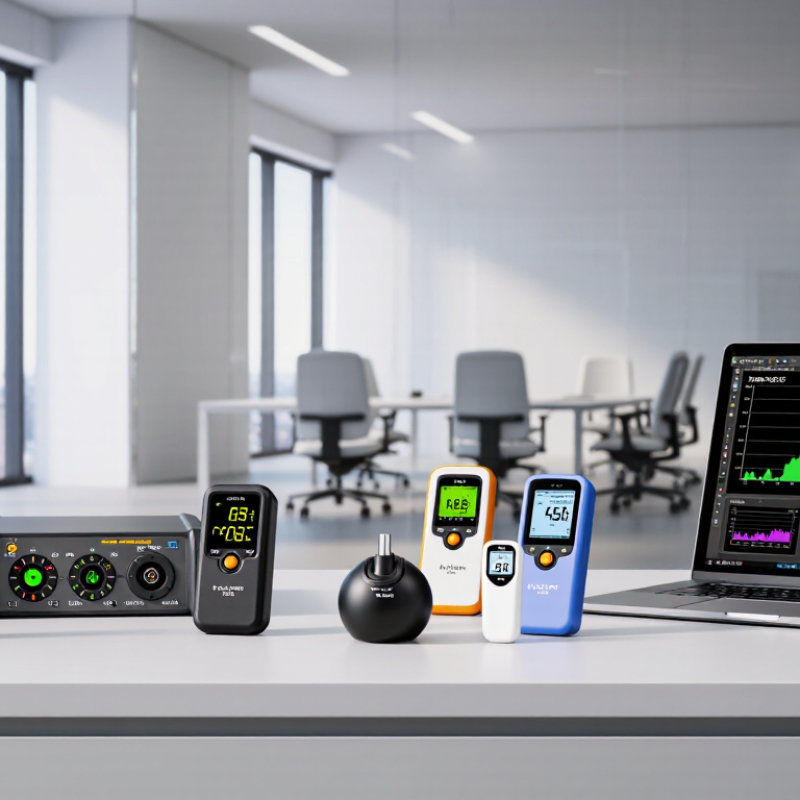
A thermal comfort measuring system is a coordinated set of sensors and software. It records air temperature, mean radiant temperature, relative humidity, and air speed. These variables describe how people exchange heat with surrounding spaces. The system may also collect clothing insulation and metabolic activity data. A person in a sweater reacts differently from someone wearing a shirt. It is not just a thermometer.
In practical testing, sensors are placed around occupied zones, often at seated and standing heights. A globe thermometer estimates radiant conditions near windows, walls, or heated surfaces. An anemometer detects drafts that ordinary temperature readings often miss. Data loggers store readings for later analysis. Software can calculate PMV and PPD indicators for wider comparisons. These indices are useful, but they are not personal truth. People also notice noise, sunlight, and limited controls.
Reliable measurement requires calibration, correct sensor placement, and stable recording intervals. Technicians should check unusual values instead of deleting them immediately. Results should be compared with occupant surveys whenever possible. A clean chart can still hide an uncomfortable corner. Comfort is also subjective. A short survey may reveal dissatisfaction that sensors cannot explain. If readings disagree with human feedback, the difference deserves documentation and careful review.
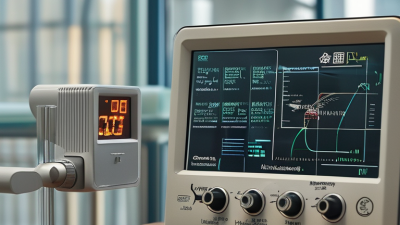
Thermal comfort measurement begins with the indoor environment, not personal opinion alone. Technicians record air temperature, relative humidity, air speed, and mean radiant temperature. These factors interact around the human body.
A calibrated system places sensors near the head, abdomen, and ankles. This arrangement detects vertical temperature differences and uncomfortable drafts. The system may also measure surface temperatures around walls, windows, and ceilings. Data is then combined with clothing insulation and metabolic activity. A seated office worker produces less heat than someone walking through a warehouse.
Engineers often calculate PMV and PPD values from these inputs. PMV estimates whether people feel cold, neutral, or warm. PPD estimates the percentage likely to feel dissatisfied. Short surveys provide valuable reality checks. Workers may report discomfort even when calculated conditions appear acceptable.
The method is not perfect.
Clothing changes during the day. People also adapt to seasons, sunlight, noise, and expectations. A reliable assessment therefore repeats measurements at different times and records unusual conditions. Sensors need regular calibration, stable placement, and clear uncertainty reporting. Otherwise, a precise-looking result may still mislead building designers. In practical projects, trained professionals compare instrument readings with occupant feedback before recommending ventilation, shading, heating, or cooling adjustments.
A high-quality thermal comfort measuring system begins with trustworthy sensors. It should capture air temperature, globe temperature, relative humidity, and air speed. These readings support operative temperature and PMV/PPD calculations. Small errors matter. An air-speed probe that drifts in a still office can change the final assessment. Calibration records, traceable references, and a clear uncertainty statement are essential. Without them, a precise-looking screen may still mislead.
Practical design also defines quality. A lightweight probe set helps technicians measure near desks, vents, and exposed work areas. The system should log readings at stable intervals and show timestamps, locations, and sampling duration. Readable software matters during long site visits. Exportable files make technical review easier. Secure data storage and protected user access support reliable reporting. These details often receive less attention than sensor accuracy. For buyers comparing Chinese manufacturers, they matter more than a low quoted price.
From field practice, repeatability is a stronger test than a single impressive result. Measure the same zone twice. Do the values agree? If not, airflow, placement, or operator technique may affect the result. A reliable manufacturer should provide setup guidance, maintenance procedures, and responsive technical documentation. Independent verification against recognized thermal comfort methods adds authority. Still, no system removes human judgment. I would question any instrument promising perfect comfort decisions. People move, clothing changes, and occupants rarely behave like laboratory subjects. That limitation deserves honest attention when selecting equipment.
China Best Thermal Comfort Measuring System Manufacturer?
How to Evaluate Chinese Thermal Comfort System Manufacturers?
Evaluate evidence, not polished brochures. The ASHRAE Global Thermal Comfort Database II contains 81,846 occupant responses from 23 countries. It shows comfort depends on air temperature, radiant temperature, humidity, air speed, clothing, and activity. A capable Chinese manufacturer should measure these variables together, not estimate comfort from temperature alone. Ask for sensor accuracy, calibration intervals, response time, and uncertainty data. Request original test records.
Standards matter. Compare the system with ISO 7730 and China’s GB/T 50785, which address thermal environment evaluation. Check whether the software calculates PMV, PPD, operative temperature, and local discomfort indicators. The database behind PMV is useful, but it is not perfect for every Chinese building. Climate, clothing habits, and occupant expectations can differ. That deserves honest discussion.
Test the equipment in a real room. Place probes near occupants, windows, supply outlets, and radiant surfaces. Review whether readings remain stable during humidity changes and variable air movement. Ask the manufacturer to demonstrate data export, audit trails, remote support, and recalibration procedures. A 2023 International Energy Agency report links building efficiency with better indoor environmental performance, but efficient control still requires trustworthy measurements. I would also inspect failure records and sample reports. No supplier is perfect. A missing uncertainty statement is a warning, even when the interface looks impressive.
A practical, brand-neutral comparison framework based on internationally recognized thermal-comfort measurement requirements and commonly used procurement criteria.
| No. | Evaluation Dimension | Key Data or Technical Requirement | Recommended Verification Method | Reference Benchmark | Suggested Weight |
|---|---|---|---|---|---|
| 1 | Measurement Scope | System should measure air temperature, mean radiant temperature, relative humidity, and air velocity. Optional measurements may include surface temperature, globe temperature, and operative temperature. | Review the sensor list, measurement channels, wiring diagram, and system configuration sheet. | Core variables required for PMV/PPD-based thermal comfort assessment. | 15% |
| 2 | Air Temperature Performance | Typical professional-grade systems should provide an operating range of approximately 0–50 °C, with accuracy commonly targeted at ±0.2–±0.5 °C. | Request calibration records and compare stated accuracy with test results across the intended operating range. | Accuracy should be suitable for indoor comfort analysis and reported environmental conditions. | 10% |
| 3 | Relative Humidity Performance | A practical indoor measurement range is generally 10–90% RH, with typical accuracy targets of approximately ±2–±5% RH. | Check calibration points, hysteresis data, long-term drift information, and sensor replacement procedures. | Performance should support indoor environmental monitoring without excessive drift. | 10% |
| 4 | Air Velocity Measurement | Low-air-speed measurement is important for comfort studies. The system should clearly state its measurable range, resolution, directional response, and accuracy at low velocity. | Ask for low-velocity test data, probe orientation requirements, and the uncertainty budget. | Low-speed accuracy is more important than maximum velocity for most occupied-space assessments. | 15% |
| 5 | Mean Radiant Temperature | The system should explain whether mean radiant temperature is measured directly with a globe sensor or calculated from globe temperature, air temperature, and air velocity. | Review the calculation method, globe diameter, emissivity assumptions, and correction formula used by the software. | Method should be documented and consistent with recognized thermal-environment measurement practice. | 10% |
| 6 | PMV and PPD Calculation | Software should calculate Predicted Mean Vote and Predicted Percentage of Dissatisfied using air temperature, mean radiant temperature, air velocity, humidity, metabolic rate, and clothing insulation. | Use the same input values in an independent calculation and compare the software output, rounding rules, and input limits. | Calculation should follow ISO 7730 or an equivalent recognized thermal comfort methodology. | 15% |
| 7 | Instrument Calibration | Each critical sensor should have traceable calibration documentation, a defined calibration interval, serial-number identification, and a stated uncertainty. | Request sample certificates, calibration procedures, traceability information, and out-of-tolerance handling records. | Calibration documentation should be current, traceable, and matched to the delivered instruments. | 10% |
| 8 | Data Logging and Export | Important functions include adjustable sampling intervals, timestamp synchronization, internal storage, live data display, CSV or spreadsheet export, and protection against data loss. | Perform a live demonstration using a representative measurement period and verify exported data integrity. | Exported files should retain channel names, units, timestamps, sampling intervals, and calibration information. | 8% |
| 9 | Measurement Positioning | The system should support measurements at representative occupant locations and heights, including seated and standing zones where applicable. | Check probe stands, mounting accessories, cable lengths, measurement height settings, and field setup instructions. | Positioning should be repeatable and appropriate for the intended occupancy scenario. | 5% |
| 10 | Environmental and Electrical Robustness | Evaluate enclosure protection, operating temperature, electromagnetic compatibility, battery runtime, charging method, and resistance to transport or field handling. | Review technical specifications, environmental test reports, safety documentation, and battery test results. | Specifications should match the actual indoor, laboratory, or field application rather than only nominal conditions. | 5% |
| 11 | Compliance and Documentation | Documentation should identify measurement methods, units, uncertainty, operating limits, maintenance requirements, and applicable standards. | Audit the user manual, datasheets, software guide, conformity documents, and technical drawings before purchase. | ISO 7726 is commonly used as a reference for measuring physical quantities related to thermal environments; ISO 7730 is commonly used for PMV/PPD evaluation. | 4% |
| 12 | After-Sales and Lifecycle Support | Assess response time, spare-sensor availability, software updates, remote support, repair process, training, and expected service life. | Request a written support policy, service-level targets, warranty terms, and replacement-part lead times. | Support commitments should be measurable and available for the full planned monitoring period. | 3% |
Thermal comfort measuring systems are commonly used wherever people share an indoor environment. They measure air temperature, relative humidity, air speed, and radiant temperature. Some systems also record surface temperature and carbon dioxide levels. In offices, technicians place sensors near seated occupants, usually around head and ankle height. This can reveal why one desk feels cold while another feels stuffy. A wall thermostat alone cannot show that difference.
Hospitals and clinics use these systems to maintain stable conditions in wards, treatment rooms, and laboratories. Schools monitor classrooms where sunlight, crowded seating, and opening doors can quickly change comfort. In factories, instruments help assess heat exposure near furnaces, machinery, and protective clothing. Hotels, airports, libraries, and shopping centers also use them to investigate guest complaints and improve ventilation. Construction teams may test completed rooms before handover.
Research laboratories use thermal comfort systems in controlled chamber studies. Facility managers compare sensor data with occupant feedback before adjusting heating or cooling schedules. Reliable testing requires calibrated probes, suitable sensor placement, and repeated measurements during different operating conditions. Human feedback still matters. Numbers can mislead. A short measurement may miss afternoon glare or a sudden draft. Doors open, equipment starts, and comfort changes. A capable manufacturer should provide clear reports, practical calibration support, and equipment suited to the actual site.
Thermal comfort measuring systems are commonly used in offices, classrooms, healthcare facilities, residential buildings, hotels, and transport cabins. The chart shows commonly referenced indoor operative-temperature bands for winter and summer comfort assessments based on ASHRAE Standard 55 guidance.
Reference conditions typically include moderate activity, typical indoor clothing, controlled air movement, and indoor relative humidity within a comfortable range. Actual comfort limits vary with occupants, humidity, air speed, clothing, activity, and radiant temperature.