Leave Your Message

What is the Best Temperature and Humidity Sensor for Outdoor Use

As the demand for accurate environmental monitoring rises, understanding the best practices in selecting a "Temperature And Humidity Sensor Outdoor" becomes essential for various applications, ranging from agriculture to weather stations. According to a report by MarketsandMarkets, the global market for environmental sensors is projected to reach USD 48.6 billion by 2025, growing at a compound annual growth rate (CAGR) of 25.3% from 2020. This significant growth underscores the necessity for reliable instruments that can withstand outdoor conditions while providing precise data.

When evaluating the best temperature and humidity sensors for outdoor use, several factors must be considered, including durability, range of measurement, and data accuracy. A study published in the Journal of Atmospheric and Oceanic Technology highlights that environmental sensors used in fluctuating weather patterns should have a high degree of protection against moisture and temperature variance. Robust sensors not only enhance data reliability but also reduce maintenance costs and operational downtime, making them a wise investment for any outdoor monitoring application.

Ultimately, selecting the right temperature and humidity sensor for outdoor use is critical for ensuring accurate data collection and effective decision-making. With the right tools, industries can better respond to environmental changes, ensuring productivity and sustainability in their operations.
What is the Best Temperature and Humidity Sensor for Outdoor Use

Key Factors to Consider When Choosing Outdoor Temperature and Humidity Sensors

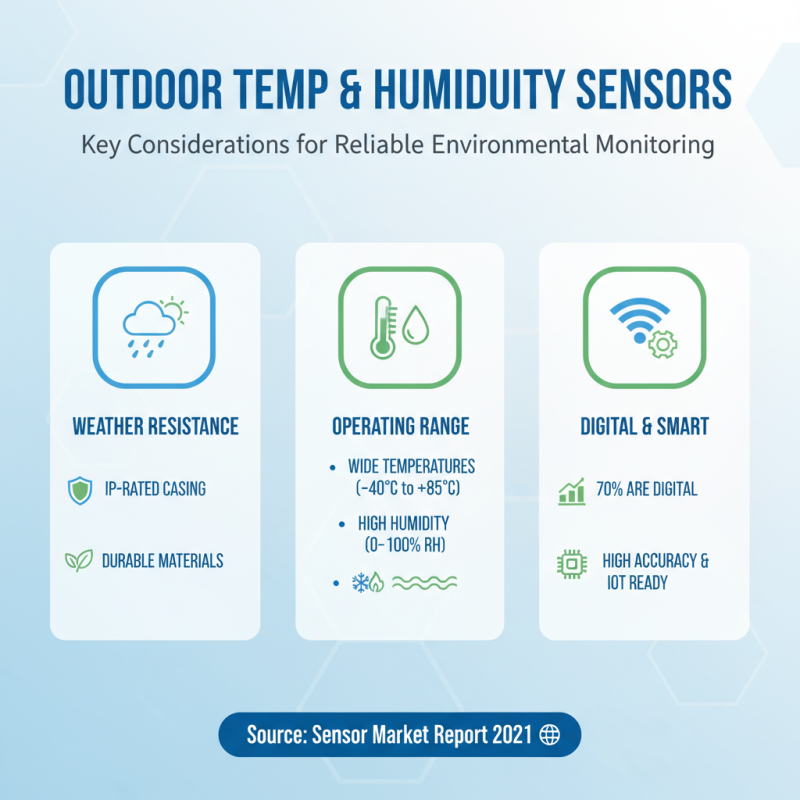
When selecting an outdoor temperature and humidity sensor, several key factors should be taken into account to ensure accuracy and durability. Firstly, the sensor's range of temperature and humidity measurement is crucial. It is essential to choose a device that can handle the extremes of your local climate, from freezing temperatures to high humidity levels. A sensor that operates effectively in these varied conditions will provide more reliable data for outdoor environments.

Another critical consideration is the sensor's construction and resistance to environmental elements. Outdoor sensors must be robust enough to withstand exposure to rain, wind, and UV radiation. Look for models with protective housings made from weather-resistant materials. Additionally, mechanisms to prevent condensation from affecting the sensor’s performance are vital to ensure long-term reliability and accuracy.

Lastly, connectivity features can significantly enhance the usability of outdoor temperature and humidity sensors. Many modern devices offer wireless connectivity options, allowing for remote monitoring via smartphone or computer. This feature adds convenience, enabling users to access real-time data from anywhere, which is particularly beneficial for those managing gardens, greenhouses, or outdoor HVAC systems. Evaluating these factors will guide you in selecting the best sensor for your needs.


Types of Temperature and Humidity Sensors Suitable for Outdoor Environments

What is the Best Temperature and Humidity Sensor for Outdoor Use

When selecting temperature and humidity sensors for outdoor use, it's important to consider their adaptability to various environmental conditions. Sensors designed for outdoor applications must be weather-resistant and reliable over a wide range of temperatures and humidity levels. According to the Sensor Market Report 2021, approximately 70% of temperature and humidity sensors utilized in outdoor settings are digital sensors, favored for their accuracy and integration capabilities with IoT systems.

There are several types of sensors that are particularly suitable for outdoor environments. Capacitive humidity sensors, for instance, are renowned for their robustness and can function effectively in high humidity scenarios, providing reliable data with a range error of less than 2%. Meanwhile, thermocouple and RTD (Resistance Temperature Detector) sensors are often recommended for measuring temperature, as they can operate efficiently in extreme conditions without compromising reliability. A recent analysis by the International Journal of Environmental Monitoring highlighted that employing dual-sensor systems can significantly increase data accuracy, especially in fluctuating outdoor climates. The continuous advancement in sensor technology also emphasizes the importance of choosing products that offer both resilience and precision for sustainable outdoor monitoring.

Accuracy and Range: What to Look for in an Outdoor Sensor

When choosing a temperature and humidity sensor for outdoor use, accuracy and range are critical factors to consider. Outdoor sensors should provide precise measurements to ensure reliable data for applications like weather monitoring and agriculture. Research indicates that sensors with an accuracy of ±0.5°C for temperature and ±2% relative humidity (RH) are generally suitable for outdoor conditions. These specifications ensure that the readings reflect true environmental conditions, which is crucial for data-driven decision-making.

In addition to accuracy, the operational range of the sensor is paramount. Sensors designed for outdoor environments should operate effectively in a broad temperature range, typically from -40°C to 70°C, and humidity levels from 0% to 100% RH. According to industry reports, reliable outdoor sensors can maintain performance across these ranges while withstanding various weather extremes. Furthermore, features such as IP68 rating for water and dust resistance can enhance the longevity and dependability of the sensor, ensuring that it continues to function optimally regardless of environmental challenges.

Best Outdoor Temperature and Humidity Sensor Specifications

This chart displays the key specifications for outdoor temperature and humidity sensors, including accuracy and range. The values represent the optimal performance that consumers should look for when evaluating different sensors.

Installation and Maintenance Tips for Outdoor Weather Sensors

What is the Best Temperature and Humidity Sensor for Outdoor Use

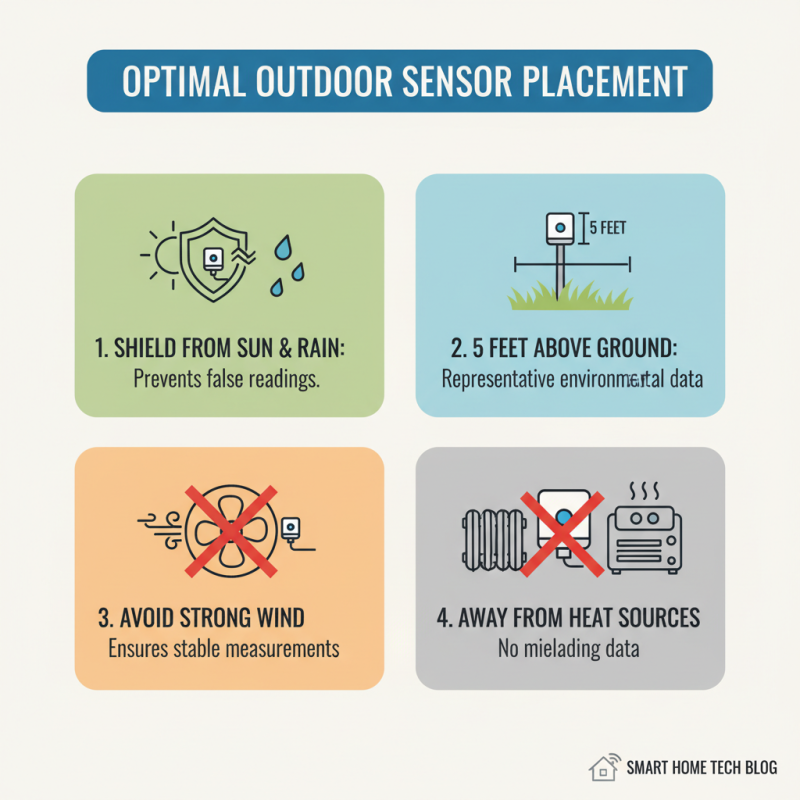
When installing outdoor temperature and humidity sensors, proper placement and orientation are crucial to ensure accurate readings. Select a location that is shielded from direct sunlight, rain, and wind, as these elements can distort sensor performance. Ideally, the sensor should be mounted at a height of about 5 feet above ground level, allowing for a representative sample of the environmental conditions. Additionally, avoid placing the sensor near heat sources, such as vents or machinery, as this will lead to misleading data.

Regular maintenance is key to keeping outdoor weather sensors functioning optimally. Begin by cleaning the sensor housing and any protective screens to prevent debris from obstructing readings. Inspect the sensor periodically for signs of wear or damage, and check connections for corrosion or looseness, which can impact performance. If the sensor is equipped with a battery, replace it as needed to ensure consistent operation. Furthermore, consider recalibrating the sensor periodically, especially after extreme weather conditions, to maintain accuracy in your measurements.

Comparative Analysis of Top Outdoor Temperature and Humidity Sensors

When selecting the best outdoor temperature and humidity sensors, it’s essential to conduct a comparative analysis of their features, accuracy, and durability. Many sensors are designed to withstand various weather conditions; however, their performance can differ significantly. Look for sensors equipped with high-quality probes, as these will provide more reliable and consistent readings. Key features to consider include wireless connectivity, battery life, and the ability to integrate with smart home systems. Additionally, make sure to evaluate the sensing range, as some models may have limitations when exposed to extreme temperatures.

Tips for choosing the right sensor: First, assess your specific needs—whether you're monitoring a garden or an outdoor workspace. Second, verify user reviews and ratings to gain insights into real-world performance over time. Lastly, consider the sensor's accuracy, typically measured in degrees for temperature and percentage for humidity. A sensor with high precision will ensure reliable data, guiding you in making decisions for your outdoor environment.

Another important factor is the sensor's ease of installation and maintenance. Some models may require more technical knowledge or setup time than others. Opt for a user-friendly sensor that can be easily mounted or installed without professional help. Regular checks and calibration maintenance are also crucial, as environmental factors can affect readings over time.

What is the Best Temperature and Humidity Sensor for Outdoor Use - Comparative Analysis of Top Outdoor Temperature and Humidity Sensors

Sensor Model Temperature Range (°C) Humidity Range (%) Accuracy Battery Life (Years) Wireless Connectivity
Sensor A -40 to 85 0 to 100 ±0.5°C, ±3% RH 2 Wi-Fi
Sensor B -20 to 70 10 to 90 ±1.0°C, ±5% RH 1.5 Bluetooth
Sensor C -30 to 60 0 to 100 ±0.3°C, ±2% RH 3 Zigbee
Sensor D -40 to 85 5 to 95 ±0.5°C, ±4% RH 5 LoRaWAN