Best Radiation Monitors for Accurate Measurements and Safety?
As the demand for safety in radiation exposure grows, the importance of accurate measurements cannot be overstated. The radiation monitoring industry is evolving, with advanced technologies enhancing detection capabilities. According to the Health Physics Society, exposure to radiation can increase health risks significantly, making reliable devices essential for both professionals and the public.
Dr. Emily Carter, a leading expert in radiation safety, emphasizes the importance of accurate readings. She states, "A quality Radiation Monitor is vital for ensuring safety and health in environments with potential radiation exposure." This highlights the necessity for precision in radiation measurement. Devices like Geiger counters and digital dosimeters are becoming increasingly sophisticated, yet their effectiveness relies on understanding their applications and limitations.
Despite advancements, some monitors still struggle with calibration and sensitivity. This inconsistency can lead to misunderstandings about radiation levels. As we select a Radiation Monitor, we must consider the context in which it will be used. Ensuring accuracy and reliability is a continuous challenge, urging consumers to stay informed and vigilant.
Types of Radiation Monitors for Safety and Measurement Accuracy
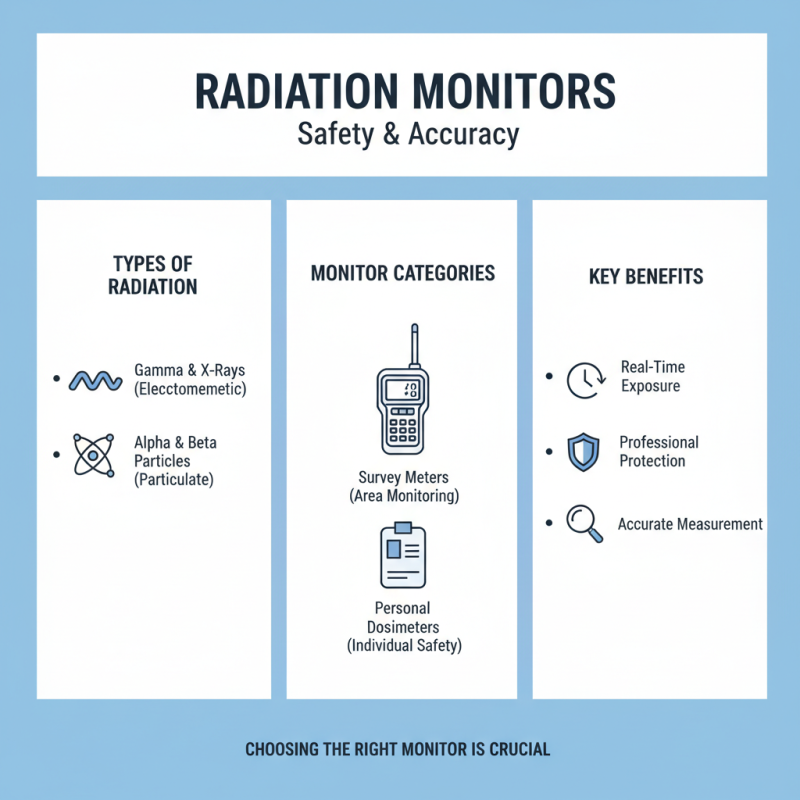
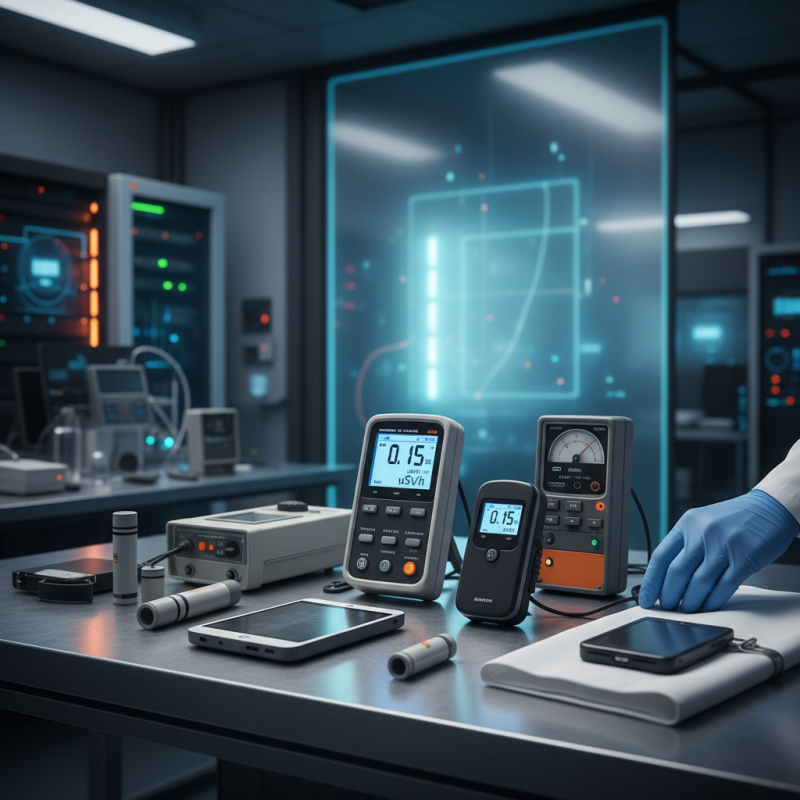
When choosing radiation monitors, understanding their types is crucial. Some monitors detect gamma and X-rays, while others measure alpha and beta particles. Personal dosimeters are essential for individual safety. They provide real-time exposure readings, making them popular among professionals in the field.
Geiger counters are common for measuring radiation levels in various environments. They offer immediate feedback and are user-friendly. However, they may not always provide precise readings when faced with low radiation levels. It's essential to understand their limitations for accurate assessments.
Tips: When selecting a radiation monitor, consider calibration frequency. Regular calibration ensures accuracy and reliability. Additionally, check the monitor's detection range. Every type has a different capacity for measuring radiation types. Invest time to research and compare options before making a choice. Consider how the monitor aligns with your specific needs and environment.
Key Features to Look for in Radiation Monitors
When choosing a radiation monitor, several key features should be taken into account. First, accuracy is paramount. A monitor that provides precise readings ensures that you can trust the data. Look for devices that have been tested and certified by recognized authorities. This adds a layer of reliability, indicating that the measurements are dependable.
Portability is another important aspect. A lightweight monitor is easier to carry around, especially for professionals working in the field. However, while portability matters, it should not compromise the device's durability. Monitors must withstand various environmental conditions to maintain functionality. Battery life is also a consideration; an extended battery enables prolonged use without constant recharging.
User-friendly interfaces enhance the experience for those unfamiliar with complex instruments. Devices should display information clearly and allow for easy navigation between settings. Remember that a monitor is only as good as the understanding of its user. Regular calibration and maintenance are necessary for consistent performance. If users fail to keep track of this, even the best monitor can give misleading results.
Best Radiation Monitors - Measurement Accuracy Comparison
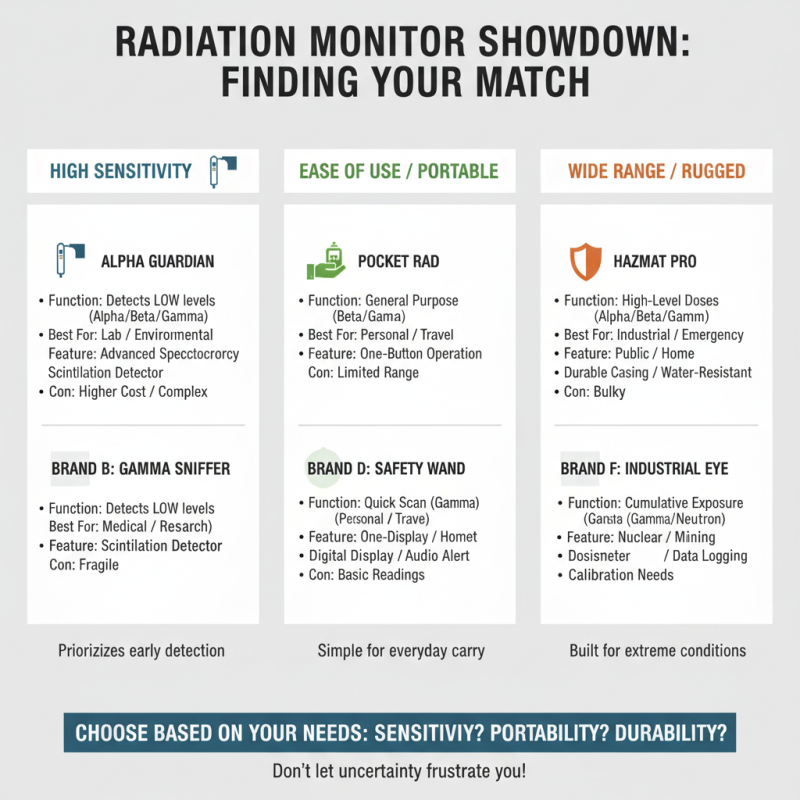
Comparison of Popular Brands and Models of Radiation Monitors
When selecting a radiation monitor, understanding the features of popular models is vital. Various monitors prioritize different functions, such as sensitivity and range. Some models excel in detecting low levels of radiation. Others might focus on ease of use and portability. Users often face challenges when choosing the right device for their specific needs. This can lead to frustration and uncertainty.
In terms of accuracy, certain monitors are equipped with advanced sensors. These sensors provide real-time data and help ensure safety. However, accuracy can sometimes vary between brands. Users should be aware of this inconsistency. Some may find that their chosen model fails to deliver reliable readings. It's essential to compare user reviews and expert evaluations before making a purchase.
Cost can also significantly impact decision-making. Some individuals may lean towards budget-friendly options, while others may invest in higher-end models. Each choice comes with pros and cons. Ultimately, understanding the capabilities and limitations of each monitor is crucial. Reflecting on personal requirements can guide users toward making informed choices.
Best Practices for Using Radiation Monitors Effectively
When using radiation monitors, understanding best practices is key to ensuring safety and accuracy. Start by familiarizing yourself with the device's features. Each monitor comes with specific settings, indicators, and operational modes. Read the manual thoroughly. This helps prevent misuse, which can lead to inaccurate readings or safety risks.
Positioning the monitor correctly is crucial. Hold it at the appropriate angle and distance from radiation sources. Improper placement can result in skewed data. Also, consider environmental factors. High humidity or dust can affect performance. Regularly calibrate your monitor to maintain its reliability. This ensures consistent and accurate measurements over time.
It’s worth noting that not all monitors are foolproof. Sometimes, devices can malfunction or give false positives. Stay vigilant for unexpected readings. Regularly cross-check with other measurement methods, when possible. Continuous learning about radiation safety and proper usage of devices will enhance your ability to protect yourself and others.
Best Radiation Monitors for Accurate Measurements and Safety
| Model |
Measurement Type |
Sensitivity |
Calibration |
Battery Life |
| Model A |
Ionizing Radiation |
High |
Annual |
200 hours |
| Model B |
Gamma Radiation |
Medium |
Every 6 months |
150 hours |
| Model C |
Beta Radiation |
Low |
Every year |
100 hours |
| Model D |
X-ray |
Very High |
Every year |
300 hours |
Maintenance and Calibration Tips for Radiation Monitoring Devices
Regular maintenance and calibration are crucial for radiation monitoring devices. These steps ensure accurate measurements and enhance safety. Without proper calibration, devices may provide false readings. This can lead to significant risks, especially in sensitive environments, such as hospitals or research laboratories. Regularly scheduling calibration checks can help identify any discrepancies in performance.
When it comes to maintenance, cleanliness is essential. Dust and debris can affect readings. Users should routinely clean the sensors and monitoring surfaces with appropriate materials. However, it's also important to avoid using harsh chemicals that might damage the equipment. Additionally, battery checks are vital for portable devices. Weak batteries can lead to unexpected failures.
Documentation of maintenance records is another key aspect. Keeping track of calibration dates and issues encountered aids in future decision-making. It can help identify patterns in device performance. Regular reflection on these records allows users to understand the reliability of their instruments better. Effective monitoring devices require collective responsibility for their care.

 Sensor
 Measuring Instruments
 Measurement Systems
 Architectural Physics Laboratory