Best Air Velocity Transmitters for Accurate Measurements?
Air Velocity Transmitters are crucial for accurate measurement in various industries. Precision in air velocity measurement impacts efficiency and safety in HVAC systems, cleanrooms, and industrial processes. According to the International Society of Automation, inaccuracies can lead to significant energy losses, sometimes exceeding 30%.
Selecting the right Air Velocity Transmitters involves understanding different technologies and their applications. Inconsistent performance can arise from temperature fluctuations or environmental factors. Reliable devices, such as thermal or vortex-based transmitters, provide better results under challenging conditions. Industry reports suggest a growing market demand for these devices, with a projected annual growth rate of around 5% through 2025.
Investing in high-quality Air Velocity Transmitters enhances process control. Nevertheless, users must continually assess their performance. Routine calibration is essential to maintain accuracy. These steps ensure optimal functionality, considering that even slight deviations can result in safety risks or operational inefficiencies. The right choice, combined with proper maintenance, leads to effective measurements and improved results.
Overview of Air Velocity Transmitters and Their Importance
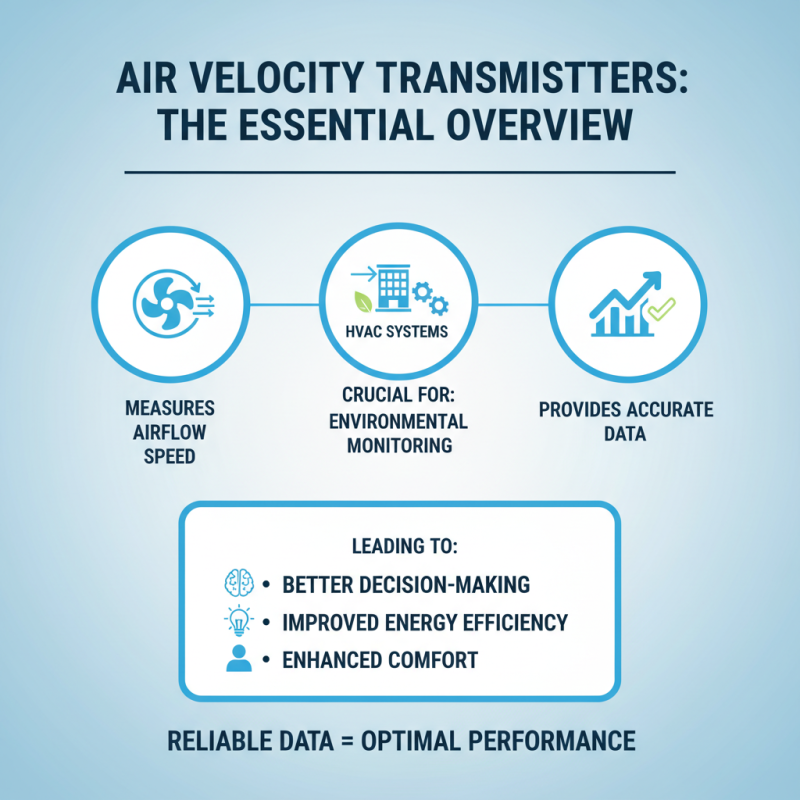
Air velocity transmitters play a crucial role in various industries. They measure the speed of air flow, providing essential data for HVAC systems, environmental monitoring, and process control. Accurate measurements are fundamental. Reliable data leads to better decision-making, improved energy efficiency, and enhanced comfort levels.
Understanding how these transmitters work is vital for any professional. They can utilize different technologies like thermal, pitot tube, or anemometric methods. Each technology has its pros and cons. For instance, thermal transmitters may offer high sensitivity. However, they could be less accurate in high-velocity situations. This variability necessitates careful selection based on specific application needs.
Regular calibration and maintenance are often overlooked. A neglected transmitter may provide inaccurate readings, leading to inefficient systems or unsafe environments. Operators must prioritize these tasks. An understanding of how air velocity affects processes ensures better operational outcomes. Fine-tuning the measurement system can yield significant improvements. A commitment to accuracy can make a real difference in any project.
Key Features to Look for in Air Velocity Transmitters
When selecting air velocity transmitters, there are several key features to consider. Accuracy is paramount. According to a recent industry report by the American Society of Heating, Refrigerating and Air-Conditioning Engineers, an accuracy level of ±2% of reading is often required for reliable measurements. Transmitters with this level of precision ensure reliable data for HVAC systems and industrial applications.
Another important feature is response time. Many professionals favor transmitters with a response time of less than 1 second. This quick feedback allows real-time monitoring, which is critical in environments where air quality is imperative. Additionally, the durability of the transmitter is vital. Devices that can withstand harsh conditions and have an IP rating of at least IP65 are typically recommended. In environments with dust or moisture, protection against water and particles is essential for prolonged device life.
It’s also beneficial to consider the communication protocols supported by the transmitter. Many modern systems utilize protocols like 4-20 mA or Modbus for easier integration into existing setups. However, sometimes the integration process can be problematic, leading to compatibility issues that may affect data transmission. Hence, understanding these aspects before making a decision is crucial for achieving accurate air velocity measurements.
Air Velocity Transmitters Performance Comparison
Top Brands and Models of Air Velocity Transmitters
When selecting air velocity transmitters, several top brands stand out in the market. These brands have developed models known for their accuracy and reliability. Various applications, such as HVAC systems and environmental monitoring, benefit from precise air velocity measurements.
Key features to look for include high sensitivity and quick response times. Many trusted brands use advanced sensor technology. This ensures that even small changes in air flow are captured effectively. Robust construction also plays a role in ensuring durability in varied environments.
However, not all models meet the same standards. Some may struggle with calibration or response time issues. It's essential to compare user reviews and specifications carefully. Subpar options can lead to inaccurate readings, which affect overall system performance. Investing time in research can lead to better decision-making.
Applications and Industry Uses of Air Velocity Transmitters
Air velocity transmitters play a crucial role in numerous industries, ensuring precise measurement of air movement. In HVAC systems, for example, accurate air velocity readings are essential for maintaining indoor air quality. According to a report by the American Society of Heating, Refrigerating and Air-Conditioning Engineers (ASHRAE), improper air flow can lead to significant energy waste, sometimes exceeding 30% of operational costs.
In the manufacturing sector, these transmitters help monitor ventilation in processes where air quality is critical. A study published in the Journal of Occupational Health highlights that poor air circulation can lead to health risks, affecting worker productivity and safety. Thus, industries increasingly rely on air velocity transmitters to minimize these risks. However, not all devices deliver accurate measurements in every condition. Monitoring conditions, such as temperature and humidity, can introduce variability that may skew readings.
Despite advancements, issues remain in achieving universally reliable measurements. Calibration is vital, yet many installations overlook this step, which can lead to inaccuracies. The need for regular maintenance and updates in technology further complicates effective use. A systematic approach can help address these challenges, ultimately enabling industries to harness the full potential of air velocity transmitters.
Maintenance and Calibration Tips for Accurate Measurements
Maintaining air velocity transmitters is crucial for accurate measurements in various applications. Regular calibration ensures that instruments remain reliable. A 2020 report from the International Society of Automation indicates that nearly 30% of measurement errors can be traced to improper calibration. It's essential to follow specific protocols for maintaining accuracy.
Routine checks of the sensors and electronics help detect drifts. Environmental factors like temperature and humidity can impact measurements. According to the Measurement Science and Technology Journal, about 15% of data inaccuracies result from sensor exposure to harsh conditions. Users should also consider the alignment of the transmitter in duct systems, as misalignment can introduce significant errors.
Documentation of calibration results is another key factor. This not only improves traceability but also highlights trends that may require further analysis. Regular reviews of historical data can reveal patterns in performance. Understanding these details can lead to better maintenance strategies. The goal is to reduce measurement uncertainties for improved process control.
Best Air Velocity Transmitters for Accurate Measurements
| Transmitter Model |
Measuring Range (m/s) |
Accuracy (%) |
Output Signal |
Calibration Frequency (months) |
| Model A |
0.5 - 20 |
± 2% |
4-20 mA |
6 |
| Model B |
0.1 - 15 |
± 1.5% |
0-10 V |
12 |
| Model C |
1 - 25 |
± 2.5% |
RS485 |
9 |
| Model D |
0.2 - 30 |
± 2% |
1-5 V |
6 |
| Model E |
0.3 - 25 |
± 1% |
4-20 mA |
12 |

 Sensor
 Measuring Instruments
 Measurement Systems
 Architectural Physics Laboratory