Air Velocity Meter Vs Anemometer Which One Should You Choose?
Choosing between an air velocity meter and an anemometer can be challenging. Both tools measure air movement, but they serve different purposes. Understanding their differences is crucial for your needs.
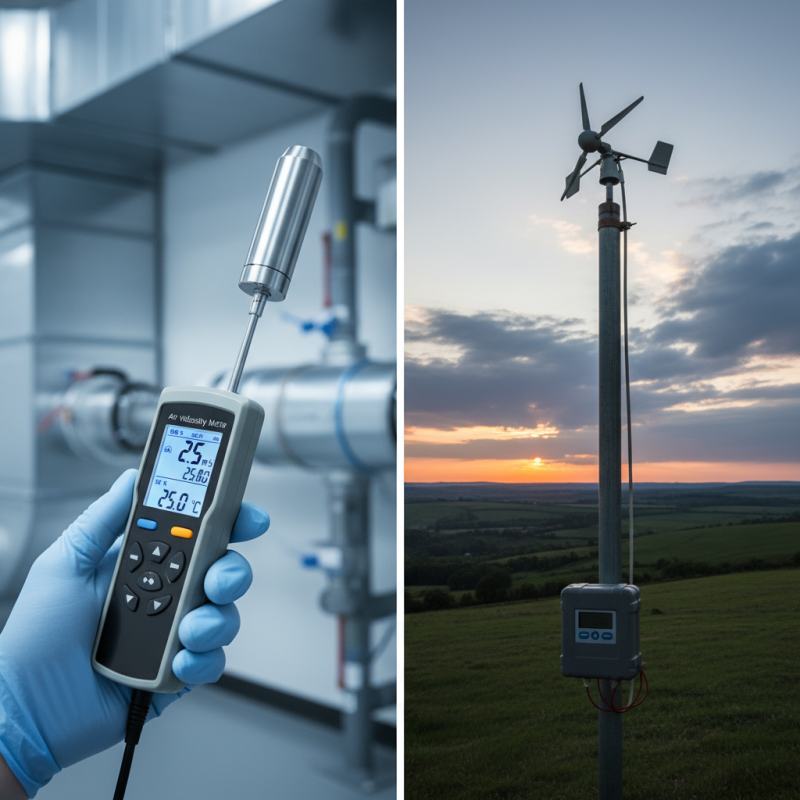
Air velocity meters are often portable and designed for specific applications. They provide precise readings in controlled environments, ideal for engineers. Anemometers, on the other hand, are versatile and used in various settings, including meteorology. They can measure wind speed and direction outdoors.
When considering "Air Velocity Meter Vs Anemometer," think about your requirements. What will you use it for? Will you need portability, or is accuracy more important? Each tool has its strengths and weaknesses, which require your attention. Reflect on your specific needs before making a decision.
Understanding Air Velocity Meters: Features and Applications
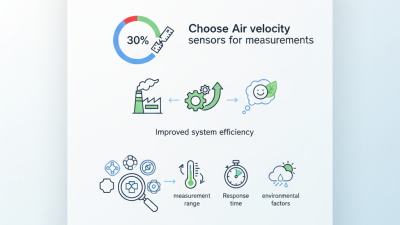
Air velocity meters play a crucial role in various applications. These devices measure the speed of air, contributing to environmental monitoring and HVAC efficiency. Accurate measurements can improve indoor air quality. Reports suggest that proper air velocity measurement can enhance energy efficiency by up to 30% in commercial buildings.
Different features set air velocity meters apart. Some models offer digital displays, while others provide real-time data logging. Certain meters can measure temperature and humidity as well. These added functions can enhance the analysis of air quality conditions. A recent study indicates that integrating these features could lead to a 25% increase in user satisfaction.
The choice between an air velocity meter and an anemometer can be tricky. People often overlook humidity levels, which affect air velocity readings. Additionally, the calibration of devices should not be neglected. Accuracy can vary based on environmental factors. It's essential to reflect on which features align best with specific needs.
Comparison of Air Velocity Meters and Anemometers
Introduction to Anemometers: Types and Usage
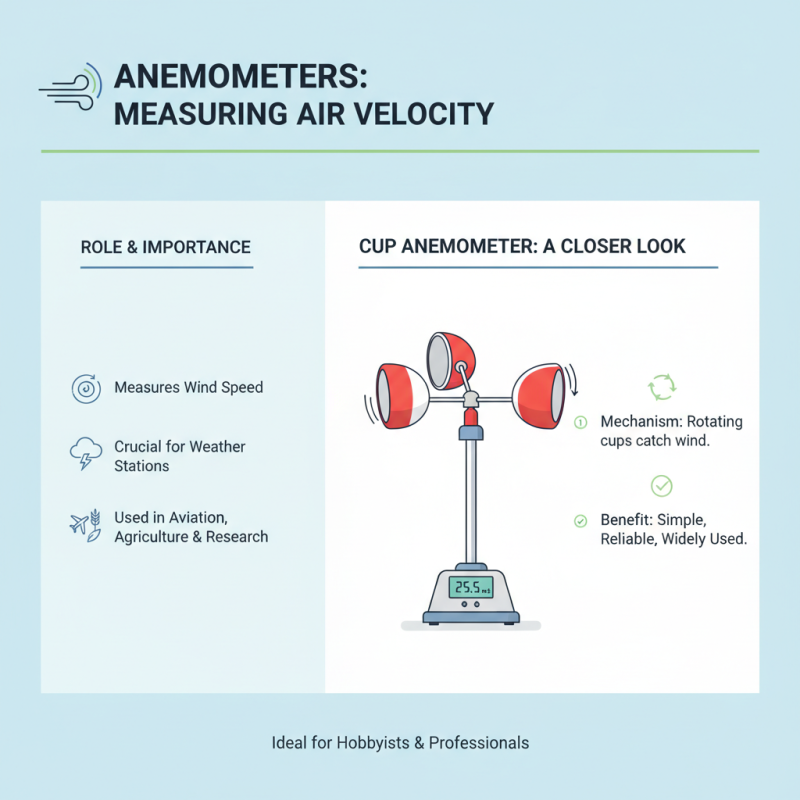
Anemometers play a crucial role in measuring air velocity. There are different types available, each designed for specific situations. For instance, cup anemometers use rotating cups to capture wind speed accurately. Their simple mechanism often appeals to various users, from hobbyists to professionals. This device is commonly seen on weather stations.
Another type is the vane anemometer, which has a small propeller. It can be handheld and is helpful in measuring airflow in ducts. It provides immediate feedback, making it popular among HVAC technicians. The compact design allows for easy transport to job sites. While they are effective, their accuracy can vary based on environmental conditions.
Choosing the right anemometer involves assessing your needs. Sometimes, users may overlook certain features. For instance, those measuring high-speed winds need a robust model. On the other hand, casual users may favor simpler designs. Assessing your requirements is vital but often skipped. Missing this step can lead to inefficiencies.
Comparative Analysis: Air Velocity Meters vs. Anemometers
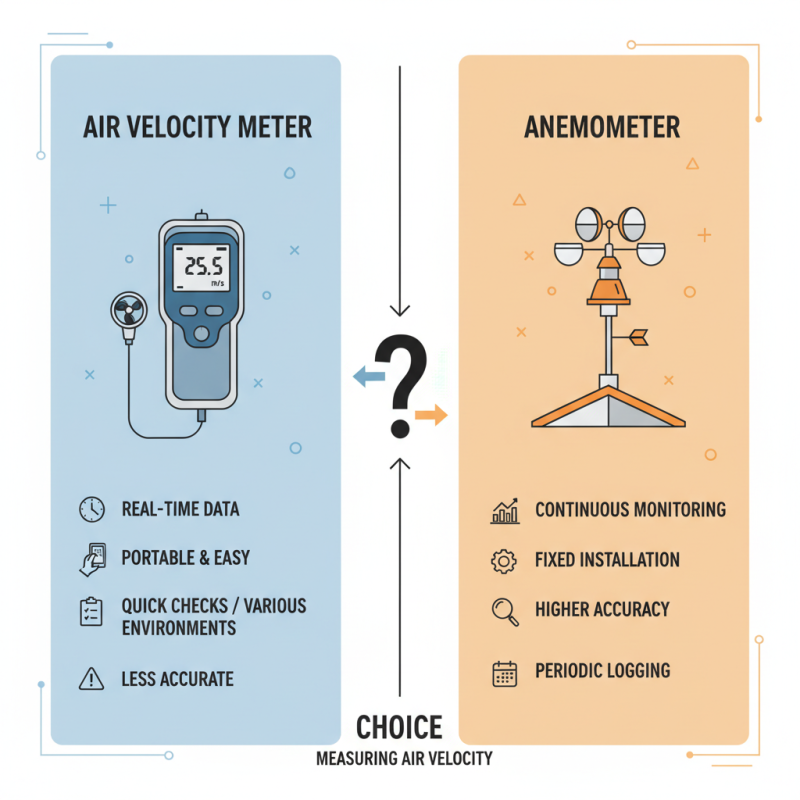
When it comes to measuring air velocity, both air velocity meters and anemometers are popular choices. An air velocity meter provides real-time data. It can be portable and easy to handle. This device is great for quick checks. You can use it in various environments. However, sometimes the readings can be less accurate than desired.
An anemometer, on the other hand, is often preferred for more precise measurements. It typically features rotating blades that measure wind speed directly. This method can provide detailed information about airflow patterns, making it ideal for HVAC systems. Yet, setting up an anemometer may take more time and effort.
**Tips:**
Consider the environment where you will use the device. In tight spaces, an air velocity meter may suit better. Always cross-reference readings from both devices when possible. This can help ensure accuracy. Remember to calibrate your tools regularly. Small errors can lead to significant issues in data interpretation.
Factors to Consider When Choosing Between the Two Instruments
When choosing between an air velocity meter and an anemometer, consider several factors. The environment plays a key role. For indoor use, an air velocity meter may be more suitable. These meters offer precise readings in closed spaces. In contrast, anemometers excel outdoors, measuring higher wind speeds.
Accuracy is essential. If you need detailed data, look closely at specifications. Some meters provide instant readings, which can be helpful, while others may need calibration. Think about your needs. Do you require portability? Some models are lightweight and easy to carry. Others may be more cumbersome and less suitable for fieldwork.
Tips: Always check the measurement range of the instrument. This ensures it fits your specific application. Research user reviews for insight on accuracy and durability. Testing both types in your environment might reveal surprising differences. Take your time to evaluate these instruments and focus on what aligns best with your requirements. Prioritize what features matter most to you.
Practical Applications: Best Uses for Air Velocity Meters and Anemometers
When choosing between an air velocity meter and an anemometer, understanding their practical applications is essential. Air velocity meters excel in indoor settings. They measure air speed in ducts, ensuring HVAC systems operate efficiently. According to a 2021 industry report, maintaining optimal air velocity in commercial buildings can improve energy efficiency by up to 25%. This is crucial when considering overall system performance.
On the other hand, anemometers shine outdoors. They are vital for weather stations and construction sites. Measuring wind speed is critical for safety and project planning. The American Meteorological Society states that accurate wind measurements can prevent costly delays in construction. It’s worth noting that while these tools serve specific purposes, user training is often overlooked. Improper usage can lead to misleading data, impacting decision-making processes.
Both instruments have strong merits. Each has its own role in air measurement. Practical use should dictate choice. It’s not always clear which is best for your needs. Reflections on their differences can drive better decisions in various applications.
Air Velocity Meter Vs Anemometer Comparison Table
| Feature |
Air Velocity Meter |
Anemometer |
| Measurement Range |
0.1 - 25 m/s |
0.5 - 50 m/s |
| Accuracy |
±0.5% of reading |
±2% of reading |
| Typical Applications |
HVAC systems, laboratories |
Meteorology, outdoor conditions |
| Portability |
Compact and lightweight |
Varies (some are handheld, others are stationary) |
| Power Source |
Battery operated |
Battery or AC powered |
| Cost |
$100 - $500 |
$50 - $3000 |

 Sensor
 Measuring Instruments
 Measurement Systems
 Architectural Physics Laboratory